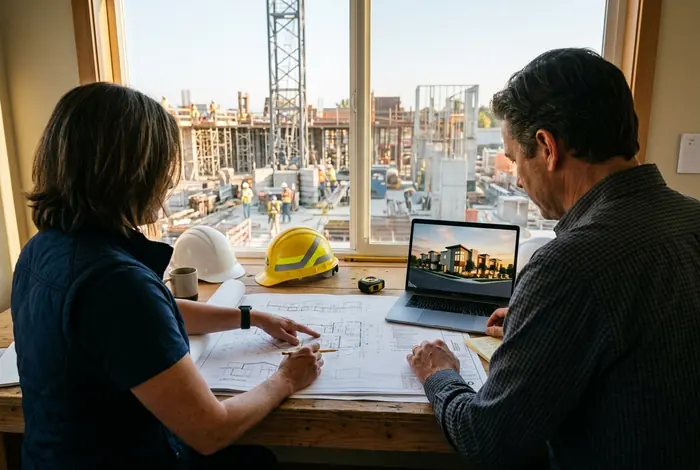
For Developers
Solar for Developers, Owners, and Investors
Solar is a line in your budget, a task in your schedule, and a condition of your Certificate of Occupancy. We make sure it is a known quantity in all three before you break ground.
You are not buying a solar system. You are buying a building that opens on time, costs what the pro forma says, complies with the Energy Code, and returns what your investors were promised. Solar touches all four, and it is one of the few scopes that can quietly hold up the final inspection if nobody owned it early.
Eventure works for developers as the solar owner on the project team: we size the requirement during schematic design, price it with real numbers, coordinate it through your architect, engineers, and general contractor, and carry it through utility approval and inspection so the Certificate of Occupancy is never waiting on the roof.
What you get
A solar partner who attends the coordination meetings, owns the scope from the Energy Code calculation to permission to operate, and keeps solar off the critical path to your Certificate of Occupancy.
What Matters to You
Six things we deliver on every project.
Schedule protection
Interconnection applications, equipment lead times, and inspection sequencing are planned against your construction schedule from the start. Solar is a scheduled activity, not a closeout surprise.
Budget certainty
We size the system from the Energy Code calculation and the real roof, price it with prevailing wage where it applies, and lock the scope before the GC's buyout. No allowance that becomes a change order.
Compliance without redesign
The required PV and battery capacity is established before the roof plan, the electrical rooms, and the structural design are finalized, so plan check comments do not send the drawings back.
Returns and incentives
Where the project supports it, we model production, utility savings or export revenue, and available federal and state incentives so you can decide whether to build to the code minimum or beyond it.
Asset you can hand off
Monitoring, warranties, O&M, and documentation are organized for the eventual owner, operator, lender, or HOA.
One point of accountability
Design, engineering coordination, procurement, installation, utility coordination, inspection, and commissioning sit with one party.
Phase by Phase
What we do, and when.
| Project phase | Eventure's work |
|---|---|
| Entitlement / concept | Preliminary sizing, roof and parking strategy, utility territory review, budget range |
| Schematic design | Energy Code calculation, Solar Access Roof Area review, equipment zones, metering strategy |
| Design development | Array layout, structural loads, electrical room coordination, battery location, fire access pathways |
| Construction documents | Final design, specifications, compliance forms with the energy consultant, utility application |
| Bidding / buyout | Fixed scope and price, prevailing wage compliance, procurement plan |
| Construction | Rough-in coordination, attachment inspection, equipment delivery, installation |
| Closeout | Inspection, utility permission to operate, Certificate of Installation, monitoring, turnover package |
The Process
Concept to closeout.
Concept
Preliminary sizing, roof and parking strategy, utility territory, budget range.
Design
Energy Code calculation, Solar Access Roof Area analysis, array zones, equipment space.
Engineering
Structural loads, electrical single-line, battery location, fire pathways, single point of coordination.
Title 24 Coordination
Compliance forms aligned with the energy model; PV and battery documented for plan check.
Permitting
Solar and storage submittals move with the building permit; plan check comments closed in one cycle.
Procurement
Modules, inverters, racking, and batteries ordered against the construction schedule with lead times tracked.
Installation
Rough-in with the electrical sub, attachments with the roofer, array and equipment set on sequence.
Utility Coordination
Interconnection application filed during design; metering, witness tests, and permission to operate pursued in parallel.
Inspection
Attachment, electrical, and fire inspections scheduled against milestones; Certificate of Installation completed.
Commissioning
Performance verification, monitoring activated, controls and battery settings confirmed.
Project Closeout
Permission to operate, as-builts, warranties, O&M documentation, and turnover before the Certificate of Occupancy.
Questions
Frequently Asked Questions
When should a developer bring in a solar contractor?
At schematic design, before the roof plan and electrical rooms are set. That is when the Energy Code requirement can be sized, the roof can be shaped to fit it, and the budget can be fixed without a later change order.
What does solar add to a development budget?
It depends on the building type, climate zone, roof area, and whether storage is required. We provide a sized estimate at schematic design and a fixed price at construction documents so the number in the pro forma is the number in the contract.
Can solar delay a Certificate of Occupancy?
Yes, when it is left to the end: a missed utility application, a battery with no approved location, or an inspection that cannot be scheduled can each hold up final sign-off. The solution is to treat solar as a scheduled trade from the beginning.
Does Eventure handle the utility and incentive paperwork?
Yes. Interconnection applications, permission to operate, compliance documentation, and incentive program applications are part of our scope.
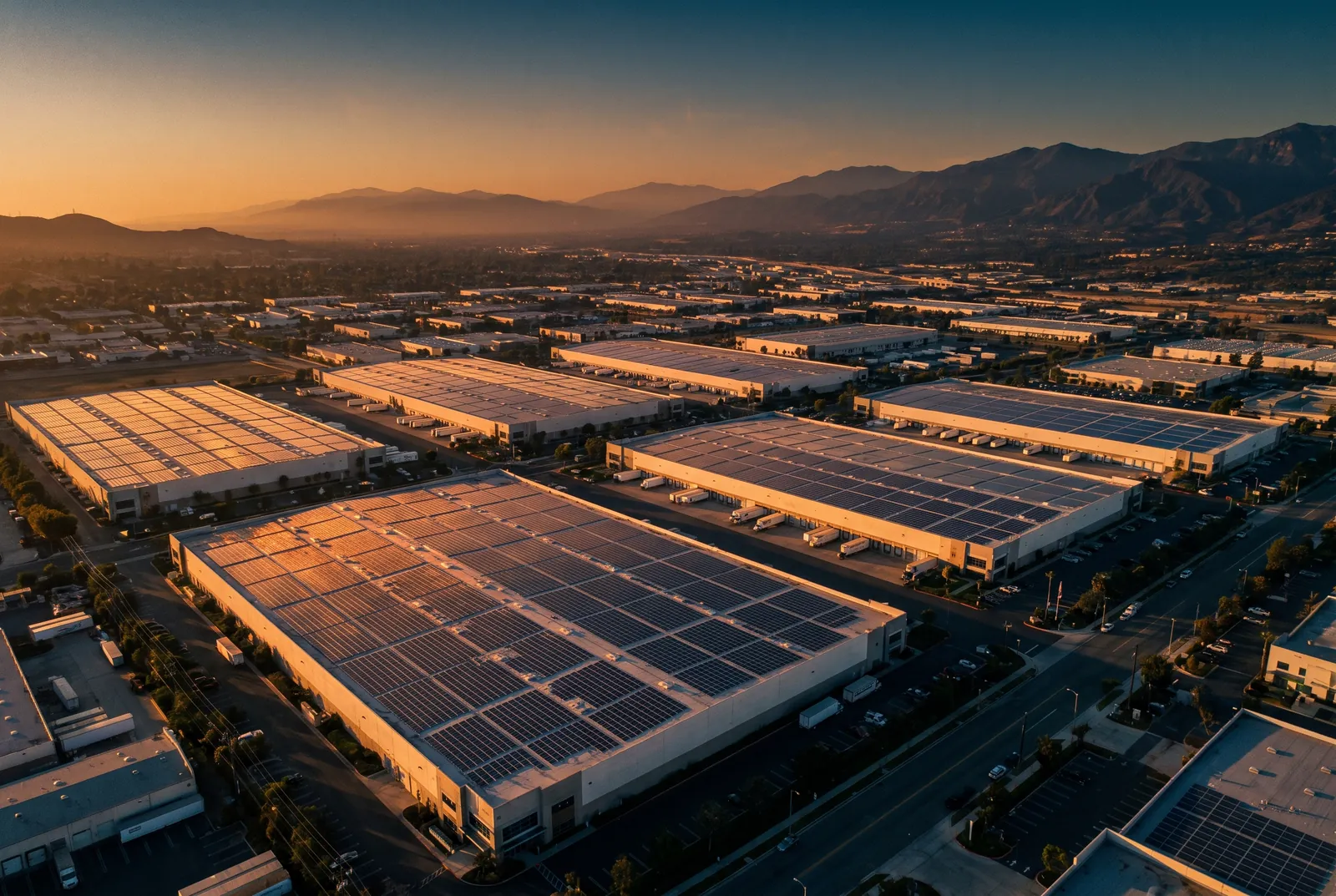
Get Eventure Involved Early
Discuss your project with a new construction solar specialist.
Send us a massing study, a schematic set, or a permit set. We will review the Title 24 requirement, the roof, the electrical approach, and the schedule, and tell you what needs to happen and when.