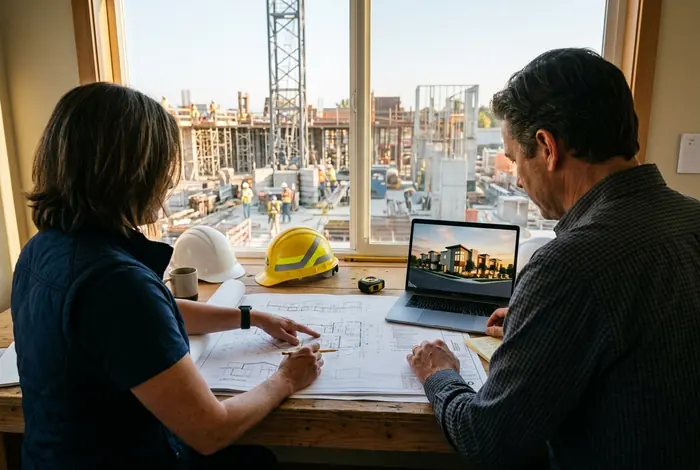
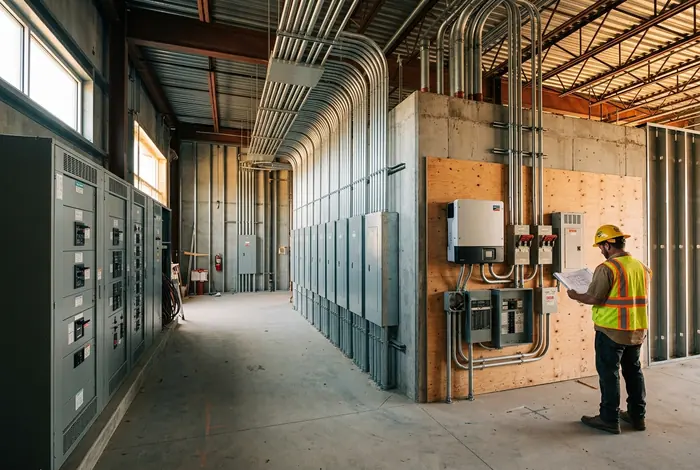
Solar and the Certificate of Occupancy
The building's final inspection depends on the Energy Code scope being complete and documented. If solar is the last trade on site, solar is the delay.
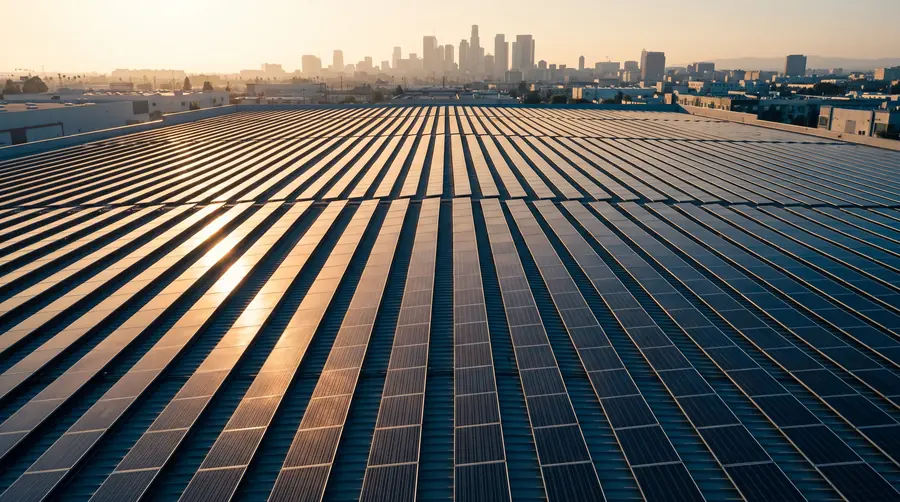
Solar for California New Construction
Eventure is a specialized solar construction partner for developers, general contractors, and architects building in California. We bring solar, battery storage, and Title 24 compliance into the project at schematic design and carry them through permitting, installation, interconnection, and inspection, so solar is never the last thing standing between your building and its Certificate of Occupancy.
A Different Kind of Solar Company
Not a solar installer. A solar construction partner.
Most solar companies arrive after the building is designed and work around it. Eventure works inside the development process: the Energy Code calculation at schematic design, the roof plan and electrical rooms coordinated with your architect and engineers, the permit and interconnection filed with the building, and the inspections closed before the final.
We understand what it takes to get a building completed in California, and we treat solar as one of the trades that has to be sequenced correctly to get there.
How we work on new constructionWho We Serve
Developers, general contractors, and architects each need something different from the solar scope. We deliver all three.
Solar sized at schematic design, priced before buyout, and closed out before the Certificate of Occupancy.
Rough-in with your electrician, attachments with your roofer, inspections that close before final.
The Energy Code calculation, roof layout, equipment placement, and compliance forms coordinated with your set.
The Last Obstacle
Don't let solar be the last thing standing between your project and its Certificate of Occupancy.
Solar is often treated as something that can be handled late in construction. On a California building it cannot. The Energy Code requires it, the fire authority reviews it, the utility has to approve it, and the building's final inspection depends on it being complete and documented. Engaged late, it lands on the critical path. Engaged early, it closes before the building does.
Fig. 01 / Where solar lands on the construction schedule, by when it was engaged. Illustrative, not to scale.
The requirement is sized from the building, so it exists the moment the building program does. Schematic design is when it should be in the room.
Roof zones, fire pathways, structural loads, electrical rooms, and the battery's home are inexpensive to draw and expensive to field-fix.
Architect, engineers, energy consultant, GC, electrical sub, fire authority, utility. Solar that is coordinated stays off the RFI log and off the critical path.
Review the Title 24 coordination guide Solar and the Certificate of Occupancy
How We Work
Eleven stages, one accountable partner. Highlighted stages are where early involvement changes the outcome most.
Preliminary sizing, roof and parking strategy, utility territory, budget range.
Energy Code calculation, Solar Access Roof Area analysis, array zones, equipment space.
Structural loads, electrical single-line, battery location, fire pathways, single point of coordination.
Compliance forms aligned with the energy model; PV and battery documented for plan check.
Solar and storage submittals move with the building permit; plan check comments closed in one cycle.
Modules, inverters, racking, and batteries ordered against the construction schedule with lead times tracked.
Rough-in with the electrical sub, attachments with the roofer, array and equipment set on sequence.
Interconnection application filed during design; metering, witness tests, and permission to operate pursued in parallel.
Attachment, electrical, and fire inspections scheduled against milestones; Certificate of Installation completed.
Performance verification, monitoring activated, controls and battery settings confirmed.
Permission to operate, as-builts, warranties, O&M documentation, and turnover before the Certificate of Occupancy.

California Title 24 Solar Requirements
The Energy Code requires PV on new homes, new multifamily, and most new commercial buildings, and battery storage on most nonresidential and high-rise multifamily buildings. The 2025 code, in effect for permit applications on or after January 1, 2026, expanded the list and raised several capacity factors.
| Building type | Requirement |
|---|---|
| Single-family | PV required since January 1, 2020 |
| Multifamily, 1 to 3 stories | PV required; battery optional (reduces PV by 25%) |
| Multifamily, 4+ stories | PV and battery required |
| Nonresidential, listed occupancies | PV and battery required since January 1, 2023 |
Summary of California Energy Code Sections 140.10 and 170.2 as published by the California Energy Commission. Exceptions apply; requirements depend on climate zone, roof area, and permit timing.
Title 24 solar requirements explainedBuilding Types
Each building type carries its own Energy Code treatment, load profile, roof conditions, and permitting path. We have planned solar for all of them.
Apartments, condos, mixed-use, affordable, student, senior
All residential & multifamilyOffice, retail, grocery, hotels, restaurants, healthcare, schools
Warehouses, distribution, cold storage, manufacturing, flex
Data centers, tech campuses, laboratories, telecom
All technology & infrastructureParking structures, solar carports, dealerships, fleet depots
All parking & automotiveSelf-storage, agriculture, wineries, civic, religious, sports
All specialty & institutionalWhere We Work
From Southern California's multifamily and industrial markets to the Bay Area, Sacramento, and the Central Valley, with the utility and jurisdiction knowledge each region requires.
Insights & Guides
The building's final inspection depends on the Energy Code scope being complete and documented. If solar is the last trade on site, solar is the delay.
Schematic design. Every phase after that narrows the options and raises the cost of the same decisions.
Twelve mistakes we see on California projects, why they happen, and what the fix looks like on paper.
Questions
Eventure is a California solar contractor specializing in new construction. We partner with real estate developers, general contractors, architects, and engineers to design solar, battery storage, and EV infrastructure into new buildings early, coordinate California Title 24 (Energy Code) requirements, and deliver the system through permitting, installation, utility interconnection, inspection, and Certificate of Occupancy.
Eventure is based in Los Angeles and works on new construction projects throughout California, including Los Angeles, Orange County, San Diego, the Inland Empire, Ventura and Santa Barbara, the Bay Area, Sacramento, and the Central Valley.
Yes. The California Energy Code (Title 24, Part 6) has required solar on new single-family homes since 2020 and on new multifamily and most new nonresidential buildings since January 1, 2023, with battery storage required on most nonresidential buildings and on multifamily buildings of four or more stories. The 2025 Energy Code, in effect for permit applications on or after January 1, 2026, expanded the list of covered building types and raised several capacity factors.
At schematic design. That is when the Energy Code requirement can be sized, the roof can be designed to carry it, the electrical rooms can be sized for the inverters and battery, and the structural engineer can carry the loads. Projects that bring solar in later pay for the same decisions twice.
The building's final inspection typically depends on the Energy Code installation being complete, inspected, and documented through the Certificate of Installation. Solar has its own chain of attachment, electrical, and fire inspections, plus utility review. When solar is the last trade on site, those steps land on the critical path.
Multifamily and residential, commercial (office, retail, grocery, restaurants, hotels, fitness, medical, schools, venues), industrial and logistics (warehouses, distribution, cold storage, manufacturing), technology and infrastructure (data centers, laboratories, campuses), parking and automotive (parking structures, solar carports, dealerships, fleet depots), and specialty and institutional buildings across California.
Yes. We work as the solar member of the design team: we provide the Title 24 PV and battery calculation, the roof layout, equipment locations, structural loads, and single-line input, and we coordinate compliance documentation with the energy consultant so the system is designed with the building rather than onto it.
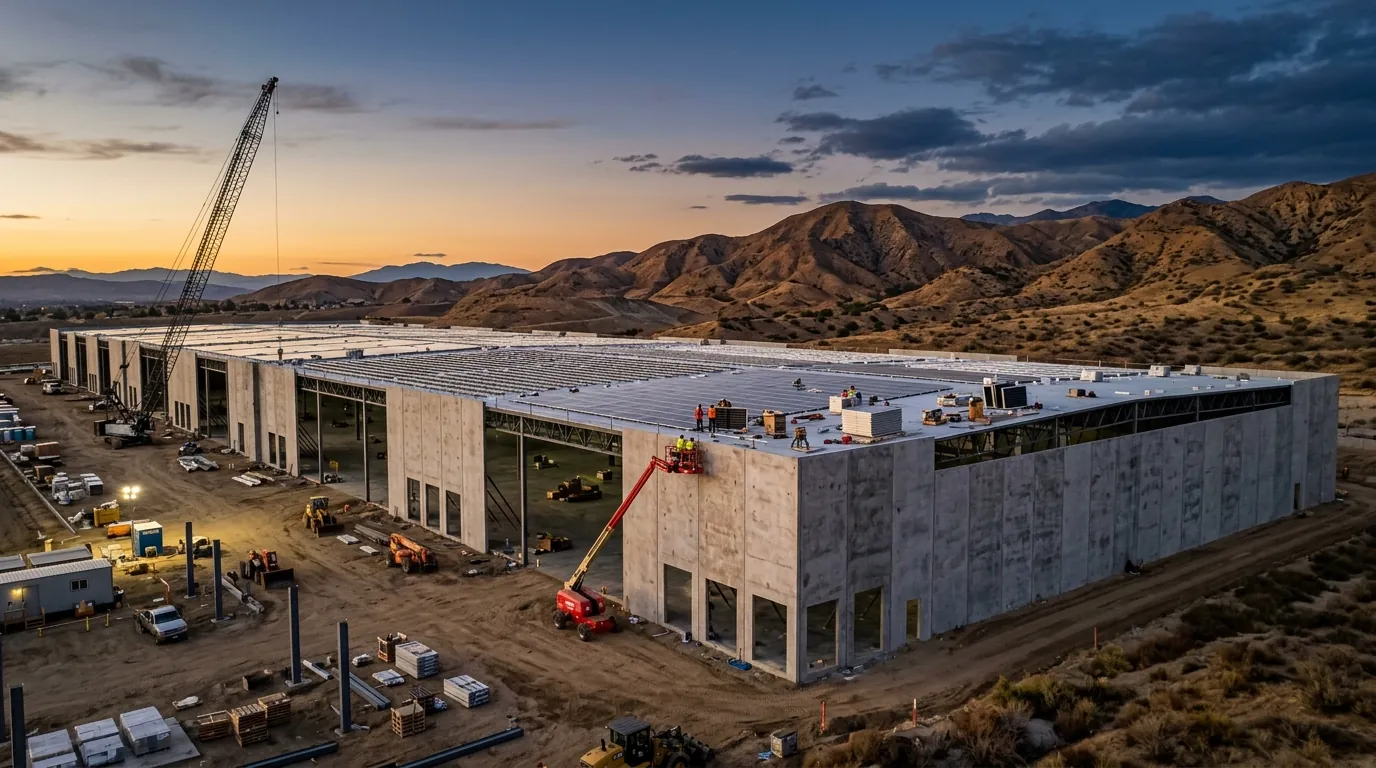
Start Solar Planning
Send us your drawings at any stage, from a massing study to a permit set. We will review the Title 24 solar and battery requirement, the roof, the electrical approach, and the schedule, and tell you what needs to happen and when.