
Commercial / California
Solar for New Restaurant Construction
Restaurants have small roofs, big kitchens, and some of the highest energy intensity per square foot of any commercial building. The 2025 Energy Code raised the PV capacity factor for restaurants in every climate zone and added electric-ready requirements for new quick-service and institutional kitchens. The roof that remains after exhaust hoods, make-up air, and condensers is the roof the array has to fit on.
Eventure's Role
Eventure designs solar for restaurant developers, franchisees, and the general contractors who build for them, with the kitchen and the parking lot in the plan from day one.
We bring solar into the project at schematic design, size the Energy Code requirement, coordinate the roof, structure, electrical rooms, and battery location with your architect and engineers, and carry the system through permitting, utility interconnection, inspection, commissioning, and closeout.
Title 24 treatment
Restaurants are a listed occupancy under Section 140.10, requiring PV and battery storage on newly constructed buildings. The 2025 Energy Code increased the restaurant PV capacity factor in all climate zones and added electric-ready requirements for quick-service and institutional kitchens under Section 120.6(k).
Design Considerations
What is different about restaurants.
- Roof crowded with kitchen equipmentExhaust fans, make-up air units, grease ducts, and refrigeration condensers claim the roof early. We coordinate the mechanical layout with the engineer so the Solar Access Roof Area is protected or the array moves to a carport.
- Electric-ready kitchensThe 2025 code requires electric-readiness for newly constructed quick-service and institutional commercial kitchens, including panel capacity provisions. Solar and storage design should reflect the building's likely all-electric future.
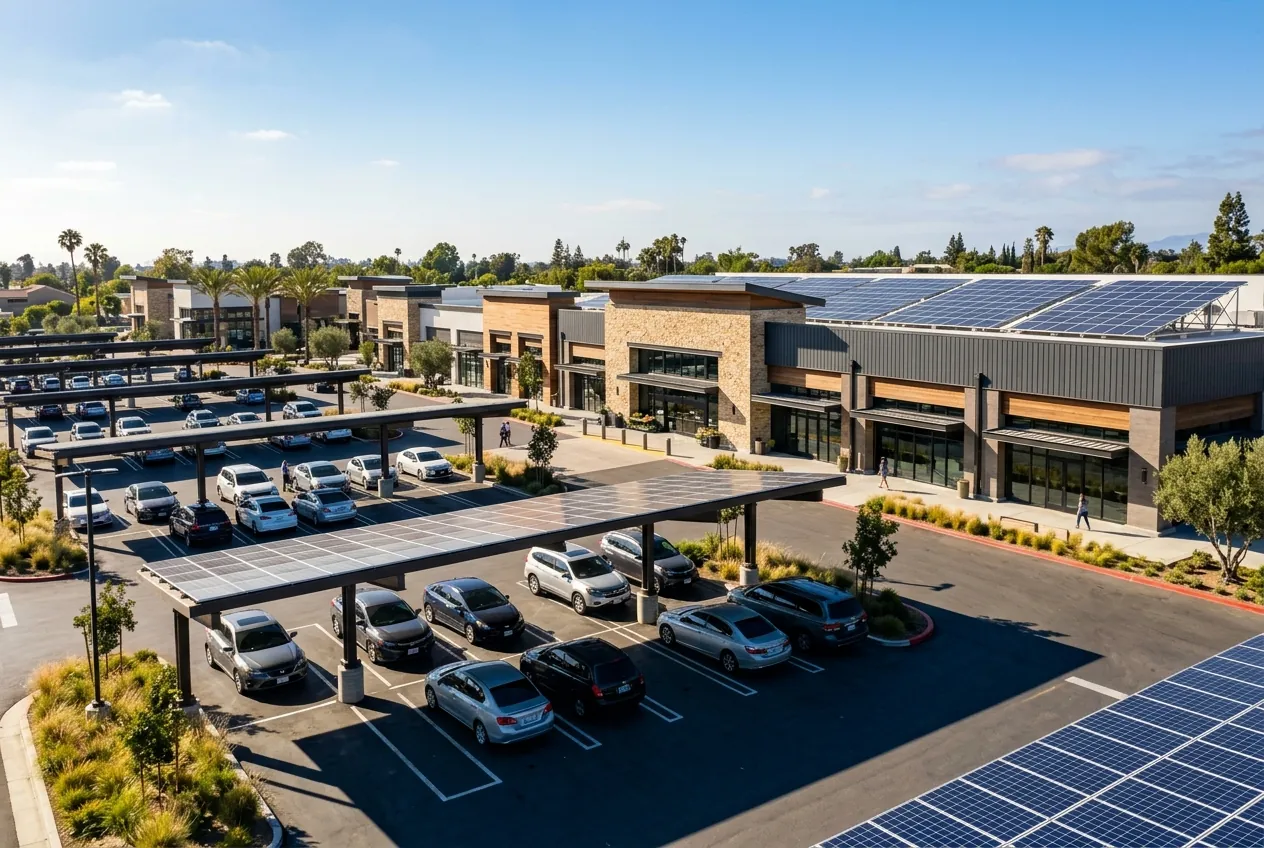
- Carport and shade structuresDrive-through and patio shade canopies can carry PV and count toward Solar Access Roof Area, often providing more capacity than the roof itself.
- Demand and storageRestaurant demand peaks during service periods. A battery sized to the code minimum satisfies compliance; sizing beyond it can reduce demand charges for the operator.
Keep Solar Off the Critical Path
Don't let solar be the last thing standing between your project and its Certificate of Occupancy.
On restaurants projects, as on every California building, the Energy Code requirement, the fire authority's review of the battery, the utility's interconnection timeline, and the building's final inspection all depend on the solar scope being designed, permitted, installed, and documented in sequence. We treat it as a scheduled trade from day one.
Solar and the Certificate of Occupancy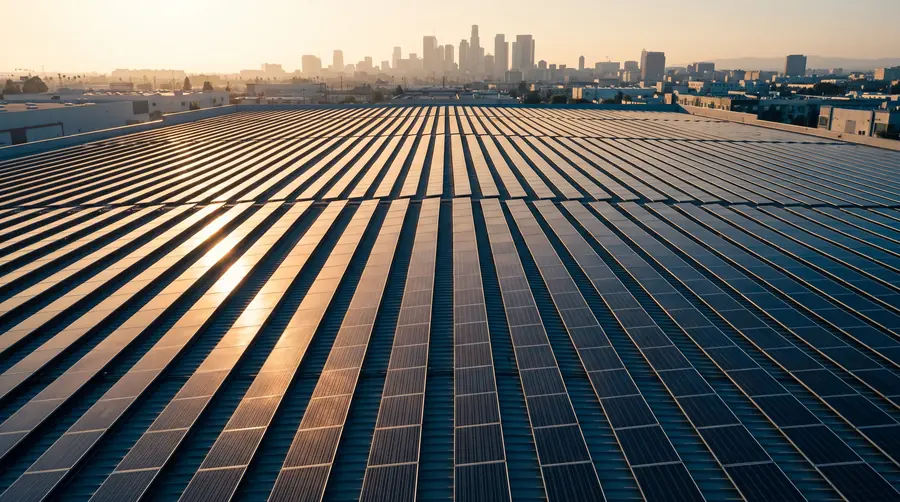
Questions
Restaurants solar, answered.
Do new restaurants in California have to install solar?
Yes, when the restaurant is a newly constructed building or a first-time tenant improvement in a building subject to Section 140.10. The required size is the smaller of the floor-area method and the Solar Access Roof Area method, so restaurants with very small available roofs may qualify for exceptions.
What if the roof is covered with kitchen equipment?
The Energy Code bases the requirement on Solar Access Roof Area, which excludes areas that must stay clear for other code reasons. Where the remaining area is below 3% of conditioned floor area, the requirement may not apply. Where it does, carports and shade structures often provide the capacity.
Related
More commercial building types.
Discuss Your Project
Planning restaurants in California?
Send us the drawings at any stage. We will size the Title 24 requirement, review the roof and electrical approach, and map the path to a Certificate of Occupancy that does not wait on solar.