
Commercial / California
Solar for New Retail and Shopping Center Construction
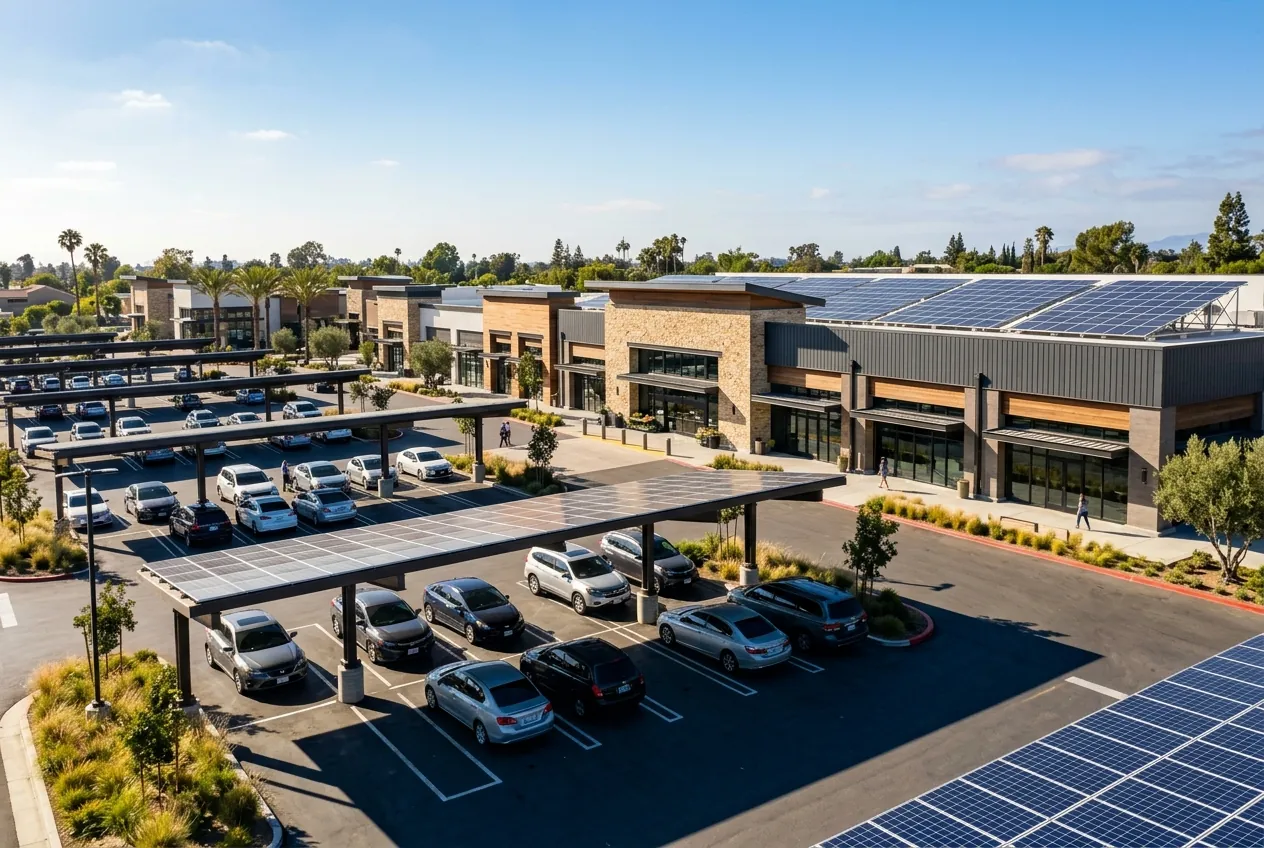
Retail centers have two solar assets: the roofs of the buildings and the parking field in front of them. The Energy Code lists retail among the occupancies that must install PV and battery storage, and the 2025 code increased the retail capacity factor. How the requirement is met across anchors, inline shops, pads, and the parking lot is a design decision with leasing consequences.
Eventure's Role
Eventure works with retail developers, REITs, and general contractors to plan center-wide solar and EV infrastructure that satisfies the code, supports the leasing plan, and delivers on schedule.
We bring solar into the project at schematic design, size the Energy Code requirement, coordinate the roof, structure, electrical rooms, and battery location with your architect and engineers, and carry the system through permitting, utility interconnection, inspection, commissioning, and closeout.
Title 24 treatment
Retail is a listed occupancy under Section 140.10, requiring PV and battery storage on newly constructed buildings, with increased capacity factors under the 2025 Energy Code. Multitenant buildings and small separately metered tenant spaces have specific exceptions that affect the calculation.
Design Considerations
What is different about retail & shopping centers.
- Multi-tenant meteringRetail tenants are separately metered, which affects how a shared array is credited. The Energy Code includes an exception for multitenant buildings where the utility offers neither virtual net metering nor community solar, and the 2025 code excludes small separately metered tenant spaces from the calculation.
- Anchor roofs and padsLarge anchor roofs carry efficient arrays; small pad buildings often do better with carports. We allocate capacity across the center rather than building by building.
- Parking canopies and EV chargingCarports provide shade, lighting, EV charging, and Solar Access Roof Area. Planning foundations and conduit with the civil design keeps them in the base scope.
- First-time tenant improvementsShell spaces completed later as first-time tenant improvements are subject to the PV and storage requirements. The center's solar plan should anticipate them.
Keep Solar Off the Critical Path
Don't let solar be the last thing standing between your project and its Certificate of Occupancy.
On retail & shopping centers projects, as on every California building, the Energy Code requirement, the fire authority's review of the battery, the utility's interconnection timeline, and the building's final inspection all depend on the solar scope being designed, permitted, installed, and documented in sequence. We treat it as a scheduled trade from day one.
Solar and the Certificate of Occupancy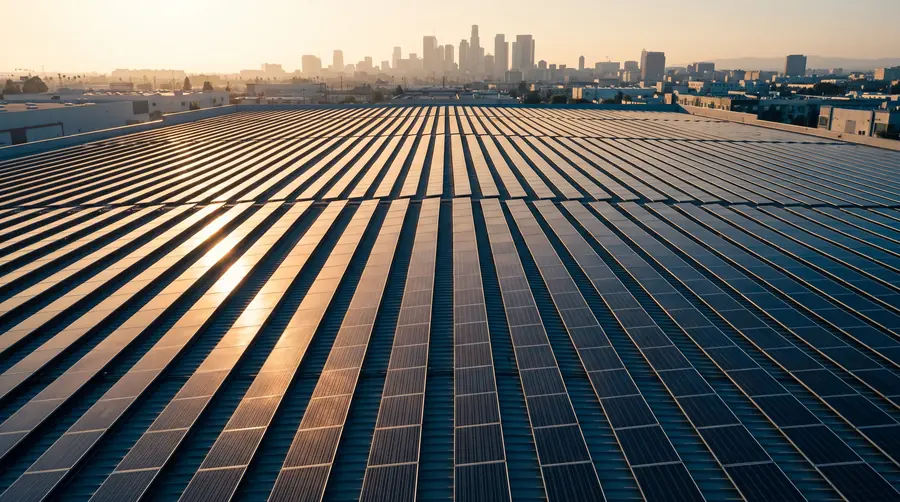
Questions
Retail & Shopping Centers solar, answered.
How does Title 24 apply to a multi-tenant shopping center?
Each newly constructed building is evaluated by its occupancy mix, and the requirement is calculated from floor area and Solar Access Roof Area. Multitenant buildings where the utility offers neither virtual net metering nor community solar may be exempt, and small separately metered tenant spaces are excluded under the 2025 code. We run the analysis for each building in the center.
Are solar carports a good fit for retail?
Usually. They convert the parking field into covered, lit, charger-equipped space while adding PV capacity that counts toward the code requirement. Tenants and shoppers notice the shade; the owner notices the operating cost.
Related
More commercial building types.
Discuss Your Project
Planning retail & shopping centers in California?
Send us the drawings at any stage. We will size the Title 24 requirement, review the roof and electrical approach, and map the path to a Certificate of Occupancy that does not wait on solar.