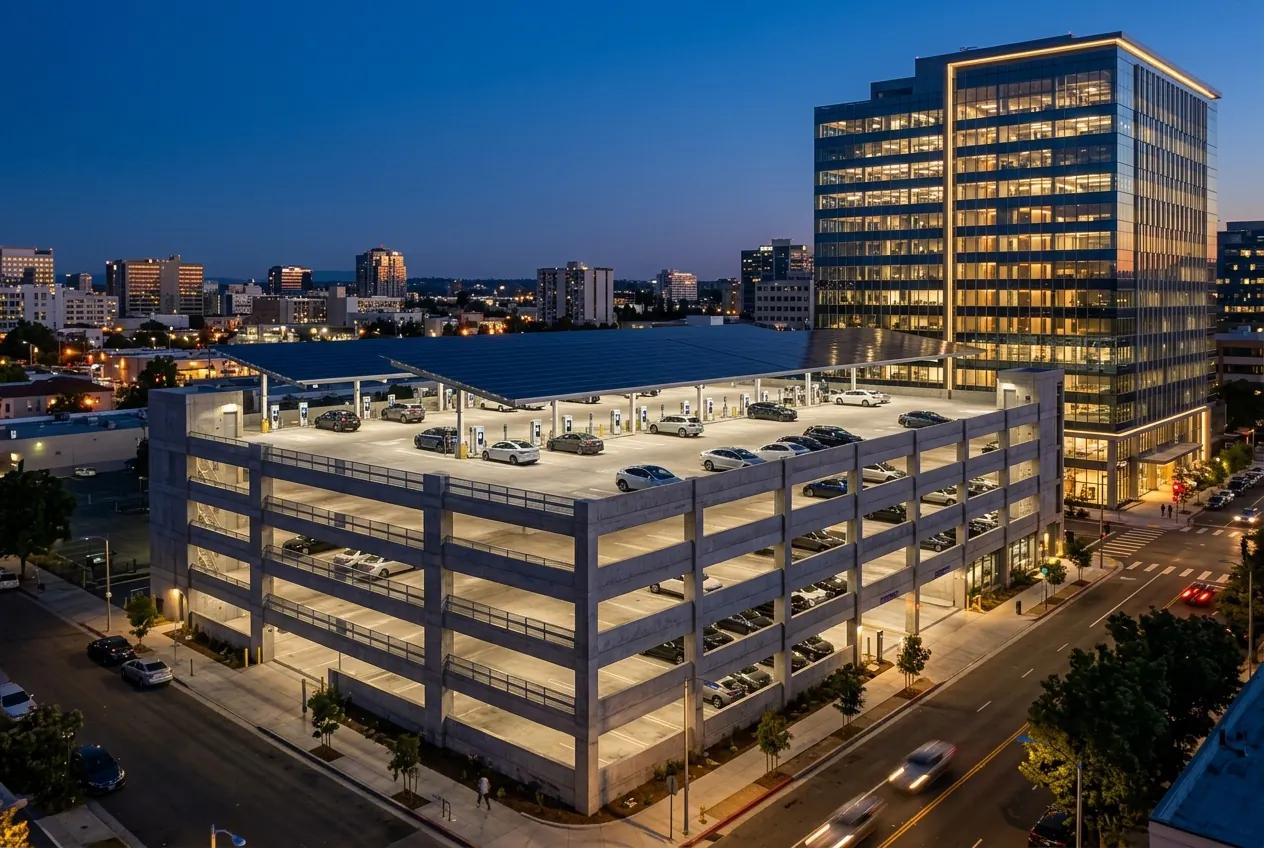
Solar for Parking, Automotive, and Fleet Construction
Parking is solar real estate. Canopies over lots and top decks add covered, lit, charger-equipped parking while producing power that counts toward the Energy Code requirement of the buildings they serve. Eventure designs carports and parking structure canopies into the site plan with the civil and structural engineers, not after the asphalt is down.
Covered parking and carports count toward Solar Access Roof Area under Section 140.10 and the multifamily provisions, and PV may be installed on carports on the lot. CALGreen sets EV-capable and EV-ready requirements for new parking, and canopy design is the natural place to integrate both.
The top deck of a parking structure is a ready-made solar site: elevated, unshaded, and already engineered to carry load. A canopy array over the top deck adds covered parking, integrated lighting, and EV charging while producing power for the structure and the buildings it serves. Designing it with the structure, rather than adding it later, keeps the columns, drainage, and conduit where they belong.
Structural integration. Canopy columns, foundations, and wind loads belong in the structure's design. Adding them to a completed deck is possible but far more expensive and disruptive.
A solar carport turns a parking lot into a power plant with shade. For new construction it is often the easiest way to add capacity the roof cannot hold, and the Energy Code counts carports toward Solar Access Roof Area. The difference between a carport that fits the site and one that fights it is whether the foundations, drainage, lighting, and EV conduit were in the civil drawings.
Canopy geometry and parking layout. Single-cantilever, double-cantilever, and T-style canopies suit different stall layouts and drive aisles. We select geometry with the civil engineer to protect parking counts and circulation.
A dealership is a showroom, a service shop, and acres of inventory lot under lights that run all night. Solar on the roofs and canopies over the inventory lot offset that load, and the chargers that electric vehicle brands now require sit naturally under the same canopies. Brand design standards and visibility requirements shape how all of it looks from the street.
Brand standards and sightlines. Manufacturer image programs govern facades, signage, and lot presentation. Canopy and array design respect sightlines to the showroom and inventory.
Fleet depots and charging hubs are electrical projects first. The chargers set the service size, the duty cycle sets the demand profile, and storage and solar determine how much of that demand the utility bill reflects. California's fleet electrification rules are pushing public and private fleets toward these facilities on fixed timelines.
Demand management. Fleet charging creates large, predictable demand peaks. Storage sized to the duty cycle reduces demand charges that can dominate the facility's operating cost.
Planning a parking & automotive project in California?
Send us the drawings at any stage. We will size the requirement, review the roof and electrical approach, and map the path to a Certificate of Occupancy that does not wait on solar.