
EV Charging and Solar Carports
Parking is solar real estate.
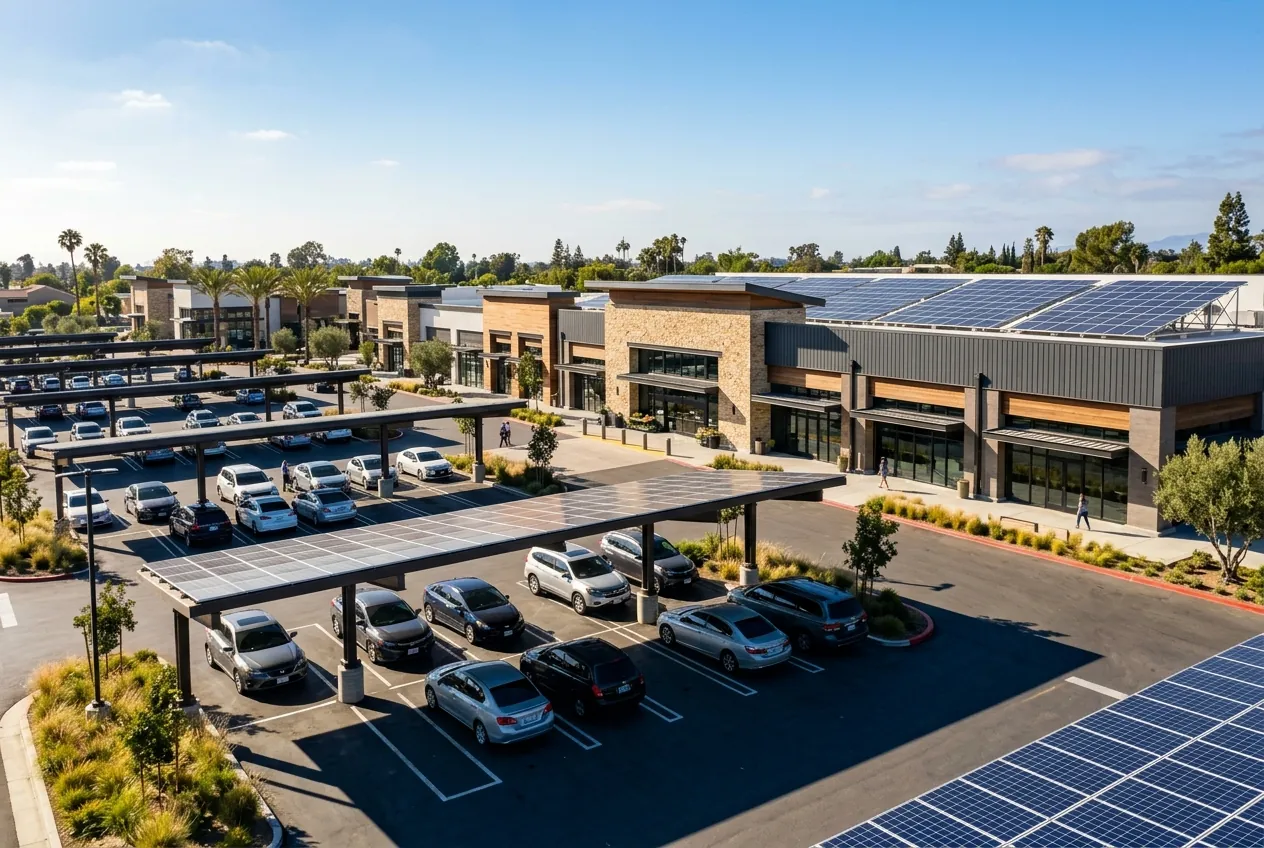
Solar canopies over lots and top decks add covered, lit, charger-equipped parking while producing power that counts toward the Energy Code requirement of the buildings they serve. CALGreen requires EV infrastructure in new parking; the canopy is the natural place to integrate both.
Two Requirements, One Structure
Title 24 counts the canopy. CALGreen requires the chargers.
Under the Energy Code, carports and covered parking count toward Solar Access Roof Area, and the required PV may be installed on a carport on the lot. On projects where the roof is crowded with mechanical equipment, amenity decks, or fire pathways, the parking field is often where the required capacity actually fits.
Under CALGreen (Title 24, Part 11), new residential and nonresidential construction must include EV-capable and EV-ready parking spaces, with percentages that depend on occupancy and parking count, and many cities adopt stricter reach codes. Conduit, panel capacity, and charger locations designed with the canopy satisfy both codes in one structure.
- Canopy geometry selected with the civil engineer to preserve stall counts and drive aisles.
- Foundations, drainage, and lighting coordinated with the site design so the canopy is in the base scope.
- EV make-ready sized for the project's charging plan, with switchgear capacity for growth.
- Storage where charging demand would otherwise set the utility bill.

Where Canopies Work
Project types where the parking field carries the capacity.
Parking structures
Top-deck canopies designed with the structure, serving the garage and adjacent buildings.
02Retail and grocery
Shade, lighting, and charging shoppers use, plus capacity the anchor roof cannot hold.
03Offices and campuses
Employee parking fields often host more capacity than the roofs, with charging employees expect.
04Fleet depots
Canopies over charging positions with storage sized to the fleet's duty cycle.
Questions
Frequently Asked Questions
Does California require EV charging in new construction?
CALGreen, the California Green Building Standards Code (Title 24, Part 11), sets EV-capable and EV-ready parking requirements for new residential and nonresidential construction, with percentages that depend on the occupancy and parking count. Local jurisdictions may adopt stricter reach codes. We confirm the requirements for each project with the design team.
Do solar carports count toward the Title 24 solar requirement?
Yes. Carports and covered parking count toward Solar Access Roof Area under the Energy Code, and PV may be installed on carports on the lot to satisfy the requirement.
What is the difference between EV-capable, EV-ready, and installed chargers?
EV-capable spaces have the conduit and panel capacity to add charging later; EV-ready spaces have a dedicated circuit and receptacle or outlet in place; installed chargers are operational EV supply equipment. CALGreen specifies minimums for each, and the cheapest time to exceed them is during construction.
Can storage reduce the cost of EV charging?
Yes. Charging creates demand peaks that can dominate a utility bill. Battery storage sized to the charging profile reduces demand charges and, paired with solar, offsets a share of the energy.
Discuss Your Project
Plan the canopy with the site, not after it.
Send us the site plan and we will show where carports fit, what they contribute to the Energy Code requirement, and how to integrate the EV infrastructure CALGreen requires.