For General Contractors
Solar for General Contractors
You need a solar sub that shows up with coordinated drawings, respects the sequence, closes its inspections, and does not become the reason the building misses its date.
Solar on a new building touches the roofer, the electrician, the framer, the structural steel, the fire sprinkler contractor, and the inspector. A solar subcontractor who treats the project like a retrofit, arriving after the roof is finished with a layout nobody coordinated, creates conflicts for every one of them. The better model is a solar partner who is in the coordination meetings from the start.
Eventure works with general contractors as a coordinated trade: shop drawings that reflect the actual roof and electrical design, rough-in scopes defined with the electrical sub, attachment inspections timed with the roofing sequence, and inspections scheduled so permission to operate lands before final.
What you get
A solar partner who attends the coordination meetings, owns the scope from the Energy Code calculation to permission to operate, and keeps solar off the critical path to your Certificate of Occupancy.
What Matters to You
Six things we deliver on every project.
Sequencing and rough-in
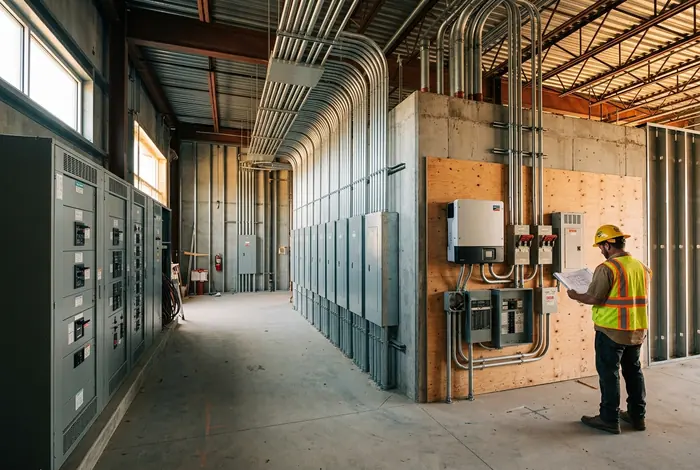
Conduit sleeves, roof blocking, equipment pads, and panel provisions are defined with your electrical and roofing subs before the deck goes on, so nothing gets cut open later.
Roof penetrations and warranties
Attachment details are coordinated with the roofing manufacturer's requirements so the roof warranty survives the array and the flashing is inspected once.
Equipment locations
Inverters, disconnects, batteries, and meters have assigned locations that satisfy the utility, the fire department, and the electrical code before the walls close.
Submittals and RFIs
Complete submittals and prompt RFI responses keep the solar scope from stalling the drawing log.
Inspections that close
Attachment, electrical, and final inspections are scheduled against your milestones, and utility permission to operate is pursued in parallel rather than after.
Labor compliance
Prevailing wage, certified payroll, and apprenticeship obligations are handled on projects where they apply, with documentation your compliance team can use.
Phase by Phase
What we do, and when.
| Project phase | Eventure's work |
|---|---|
| Preconstruction | Scope review, coordination drawings, long-lead equipment identification, utility application status |
| Structure and deck | Attachment and blocking locations, roof load confirmation, canopy foundations with site work |
| Rough-in | Conduit, sleeves, panel provisions, equipment pads coordinated with the electrical sub |
| Roofing | Attachment installation and flashing inspection sequenced with the roofer |
| Equipment and array | Racking, modules, inverters, battery system set and wired |
| Inspection | Electrical and fire inspections, Certificate of Installation, utility witness test if required |
| Closeout | Permission to operate, commissioning report, monitoring handoff, as-builts and O&M documentation |
The Process
Concept to closeout.
Concept
Preliminary sizing, roof and parking strategy, utility territory, budget range.
Design
Energy Code calculation, Solar Access Roof Area analysis, array zones, equipment space.
Engineering
Structural loads, electrical single-line, battery location, fire pathways, single point of coordination.
Title 24 Coordination
Compliance forms aligned with the energy model; PV and battery documented for plan check.
Permitting
Solar and storage submittals move with the building permit; plan check comments closed in one cycle.
Procurement
Modules, inverters, racking, and batteries ordered against the construction schedule with lead times tracked.
Installation
Rough-in with the electrical sub, attachments with the roofer, array and equipment set on sequence.
Utility Coordination
Interconnection application filed during design; metering, witness tests, and permission to operate pursued in parallel.
Inspection
Attachment, electrical, and fire inspections scheduled against milestones; Certificate of Installation completed.
Commissioning
Performance verification, monitoring activated, controls and battery settings confirmed.
Project Closeout
Permission to operate, as-builts, warranties, O&M documentation, and turnover before the Certificate of Occupancy.
Questions
Frequently Asked Questions
How early does Eventure want to be involved?
Preconstruction, ideally while the roof and electrical designs can still change. Even on projects already in construction, we start with a coordination review to catch conflicts before they reach the field.
Do you coordinate with our electrical subcontractor?
Yes. We define the rough-in scope split, conduit routing, panel provisions, and equipment locations with your electrical sub and document it so both scopes are clear.
Who handles the fire department review of the battery?
We prepare the battery submittal, clearances, signage, and ventilation details for the fire authority and coordinate the inspection.
What about the roof warranty?
Attachment methods are selected and detailed to meet the roofing manufacturer's requirements, and flashing is inspected with the roofer so the warranty is preserved.
Get Eventure Involved Early
Discuss your project with a new construction solar specialist.
Send us a massing study, a schematic set, or a permit set. We will review the Title 24 requirement, the roof, the electrical approach, and the schedule, and tell you what needs to happen and when.