California Energy Code
Title 24: Solar and Storage Are Now Building Code
California requires solar on new construction, and the 2025 code adds battery storage for most new commercial buildings. We turn that mandate from a checkbox into an asset.
The Requirement
What the Code Demands
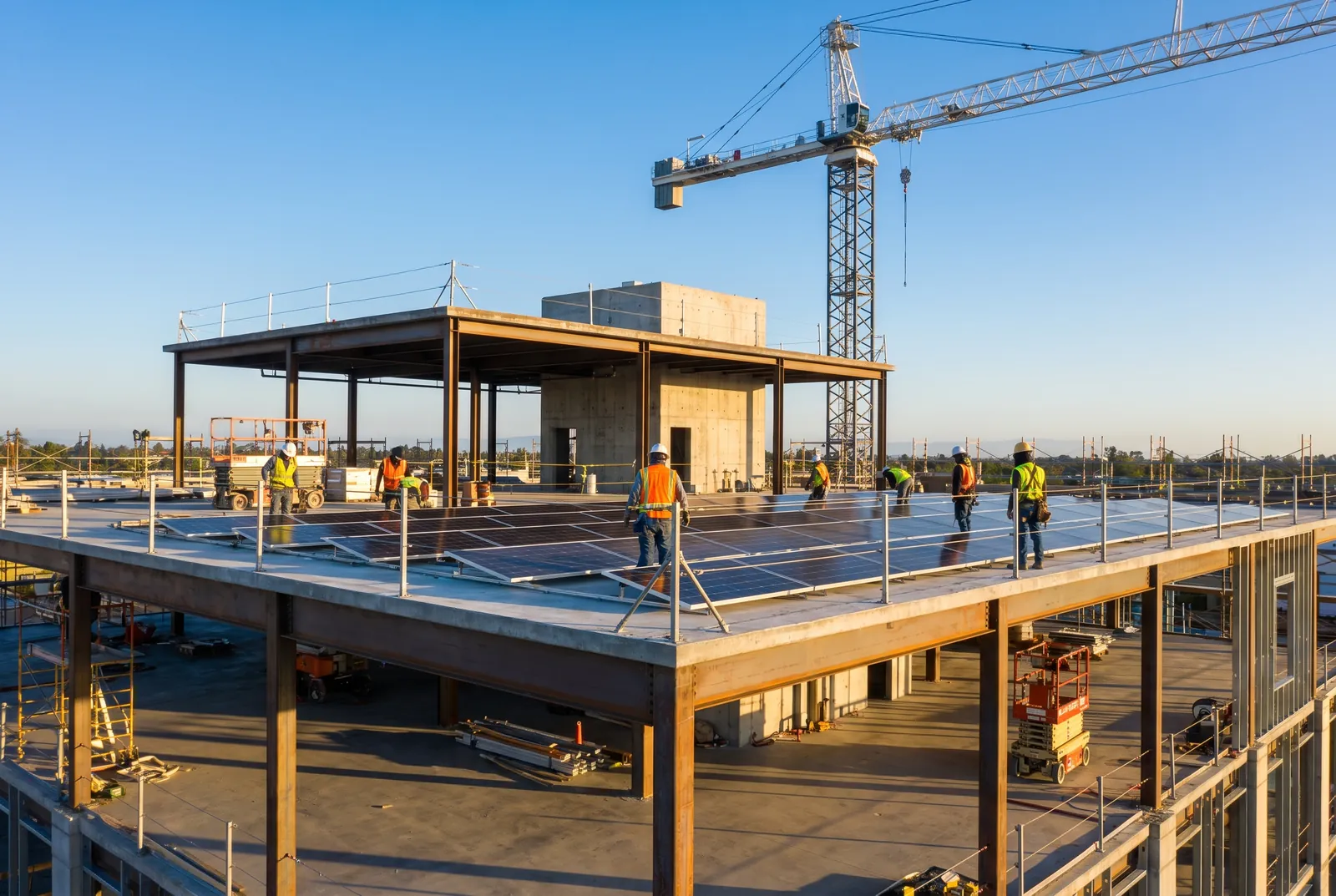
Since January 1, 2023, California's Title 24 energy code has required solar installation on most new commercial and residential buildings. The 2025 code cycle, effective January 1, 2026, goes further: new nonresidential buildings such as offices, retail, schools, hotels, and warehouses must generally install both solar PV and battery energy storage.
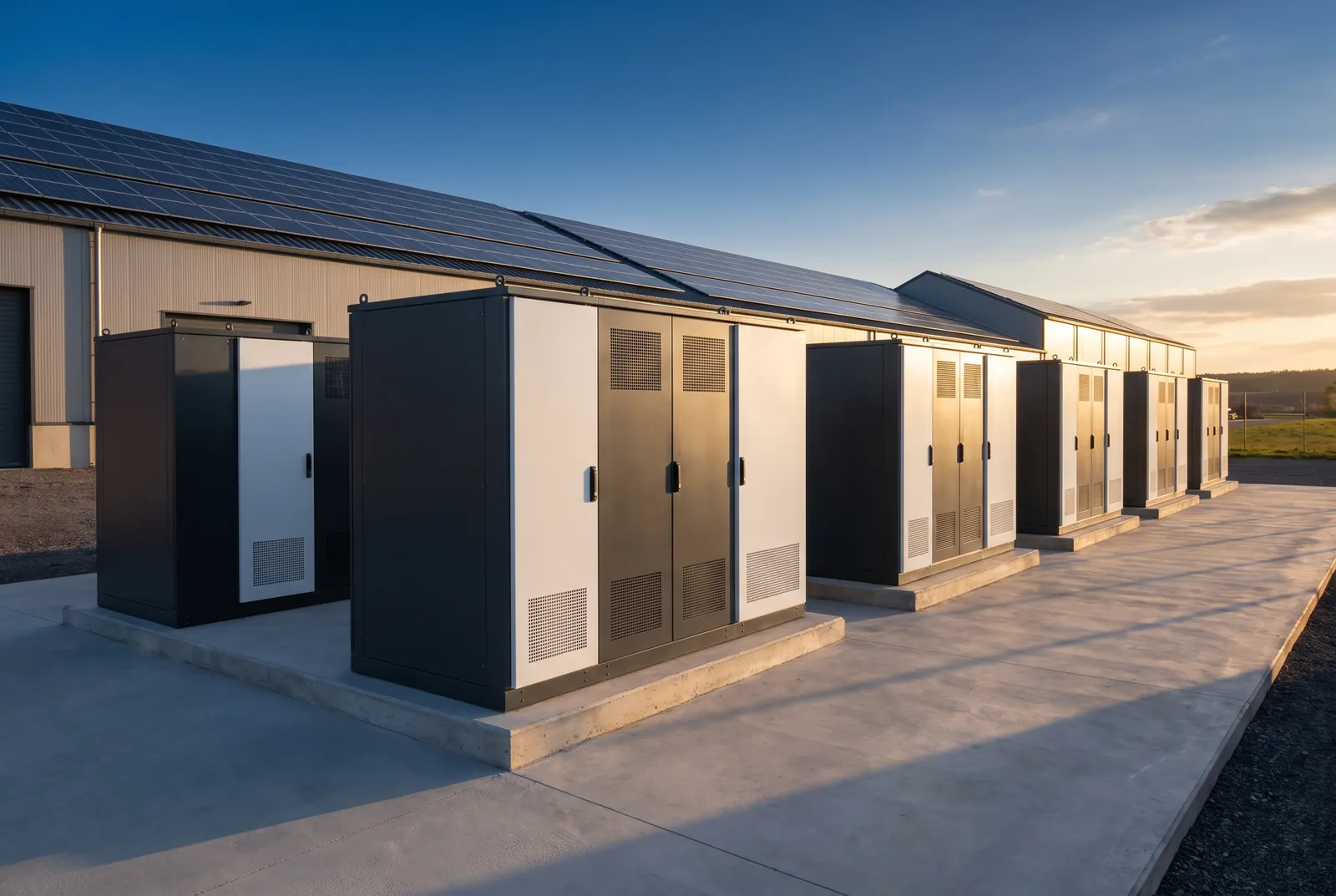
Required solar capacity is set by the smaller of two calculations: one based on Solar Access Roof Area, at 14 W/ft² for low-slope roofs and 18 W/ft² for steep-slope roofs, and one based on conditioned floor area with factors by building type and climate zone. Battery storage sizing follows its own formula tied to floor area and the required PV system.
- Exceptions exist for limited or shaded roof area and certain project types
- Battery storage can interact with the required PV sizing, and design choices here move real money
- Plans approved under older code cycles may be grandfathered depending on timing
Also Know
The Rules Around the Rule
Prevailing Wage (AB 2143)
Commercial net energy metered solar projects over 15 kW, including associated battery storage, are treated as public works and must pay prevailing wages. We price this in from day one, so proposals hold.
Timing Is Strategy
Which code cycle applies depends on when your permit application lands. On the margin, that timing changes required system sizes and budgets. We help teams plan it deliberately.
Compliance Can Perform
A code-minimum system designed poorly is a sunk cost. The same square footage designed well becomes a revenue or savings engine. The delta is engineering.
For Developers & Architects
Bring Us in Early
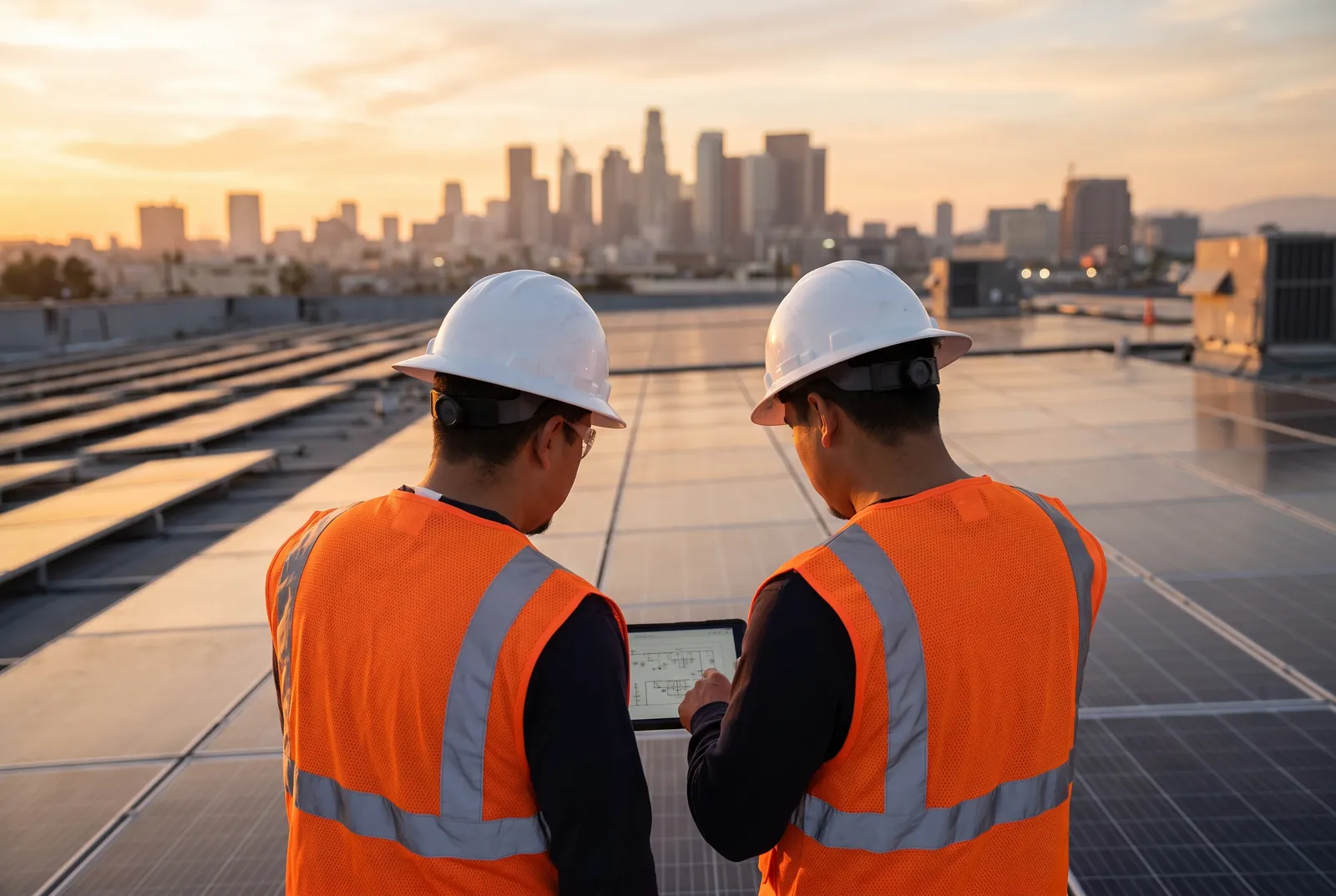
The best Title 24 outcomes happen at schematic design, not at plan check. We work alongside your architect and engineer of record to size systems intelligently, position equipment, plan conduit and interconnection, and capture every incentive the project qualifies for.
- Compliance modeling aligned with your energy consultant's CBECC runs
- Value engineering that treats the mandate as an investment decision
- Turnkey delivery so solar and storage never hold up your certificate of occupancy
Code summaries are provided for general orientation and reflect our reading of published California Energy Commission materials as of mid 2026. Specific requirements depend on your project's building type, climate zone, and permit timing. We verify current requirements for every engagement.