
Residential & Multifamily / California
Solar for New Multifamily and Apartment Construction
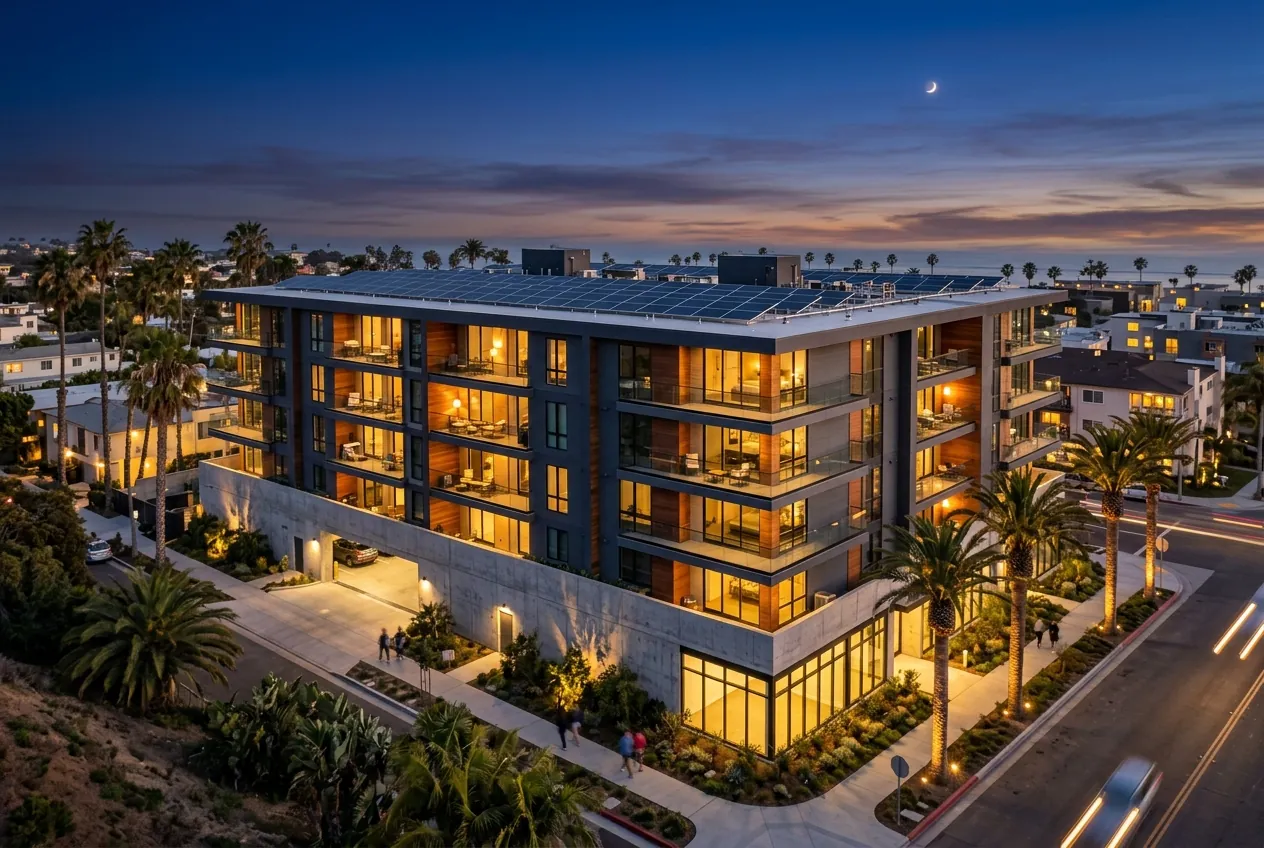
Every new apartment building in California is a solar project whether or not the pro forma says so. The Energy Code requires photovoltaics on new multifamily buildings, requires battery storage on buildings of four or more habitable stories, and ties the size of both to floor area, dwelling-unit count, and climate zone. The developers who treat that as a design input rather than a closeout item finish on time and keep the roof they intended to build.
Eventure's Role
Eventure designs, coordinates, and installs solar for multifamily developers, general contractors, and architects across California. We work from the schematic roof plan forward so the array, the inverters, the storage, and the metering strategy are settled before the building is framed.
We bring solar into the project at schematic design, size the Energy Code requirement, coordinate the roof, structure, electrical rooms, and battery location with your architect and engineers, and carry the system through permitting, utility interconnection, inspection, commissioning, and closeout.
Title 24 treatment
New multifamily buildings must install PV under the California Energy Code, with sizing by Equation 170.2-C (low-rise) or 170.2-D (high-rise) or by Solar Access Roof Area, whichever is smaller. High-rise multifamily that requires PV also requires battery storage under Section 170.2(h), with exceptions for very small systems. Low-rise projects may reduce the required PV by 25% by installing a battery of at least 7.5 kWh that meets Joint Appendix JA12.
Design Considerations
What is different about apartment buildings.
- Low-rise versus high-rise rulesBuildings of up to three habitable stories follow Section 170.2(f), with PV sized from conditioned floor area and dwelling-unit count by climate zone. Buildings of four or more stories follow Section 170.2(g) and 170.2(h), which add a battery requirement sized to the PV system. The story count decision made in schematic design changes the solar scope.
- The podium roof is contested spaceAmenity decks, mechanical equipment, elevator overruns, stair towers, and fire access pathways all compete with the array for the same roof. Solar Access Roof Area drives the required size, so layout decisions in design development determine whether the system fits or triggers a redesign at plan check.
- Metering and allocation strategyMaster-metered, individually metered, and virtual net energy metering arrangements each change how the array is wired, where the inverters land, and how the utility interconnection is filed. Choosing the structure early avoids rewiring the electrical room later.
- Fire access and structural loadsRooftop pathways and setbacks required by the fire code reduce usable roof area, and the array's dead load must be in the structural engineer's calculations from the start. Both are inexpensive to accommodate on paper and expensive to fix in the field.
Keep Solar Off the Critical Path
Don't let solar be the last thing standing between your project and its Certificate of Occupancy.
On apartment buildings projects, as on every California building, the Energy Code requirement, the fire authority's review of the battery, the utility's interconnection timeline, and the building's final inspection all depend on the solar scope being designed, permitted, installed, and documented in sequence. We treat it as a scheduled trade from day one.
Solar and the Certificate of Occupancy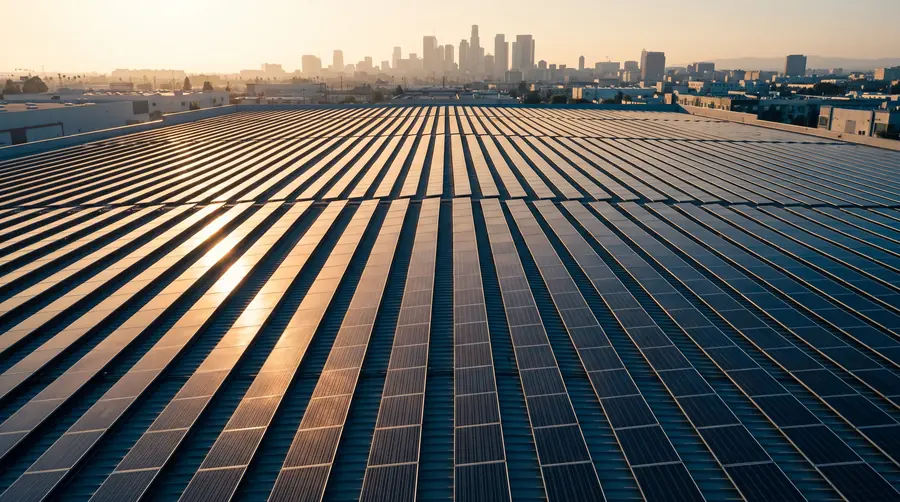
Questions
Apartment Buildings solar, answered.
Does a new apartment building in California have to include solar?
Yes, with limited exceptions. The California Energy Code (Title 24, Part 6) requires a PV system on newly constructed multifamily buildings. Low-rise buildings are sized by conditioned floor area and dwelling-unit count by climate zone, and high-rise buildings by floor area or roof area. Exceptions exist where the solar-accessible roof area is very small relative to the building or the required system would be under a minimum size.
When does a multifamily building need a battery?
Newly constructed multifamily buildings of four or more habitable stories that are required to install PV must also install a battery storage system sized to the PV system under Section 170.2(h), unless the required battery would be under 10 kWh or the installed PV is below 15% of the calculated size. Buildings of three stories or fewer are not required to add storage, but may use a battery to reduce the required PV size.
How does solar get allocated to tenants?
That depends on the metering structure. Virtual net energy metering lets a single system be credited across individual tenant meters and common-area meters, while master-metered buildings and common-area-only systems are wired differently. We settle the strategy with the developer and the utility during design so the electrical room is built once.
Related
More residential & multifamily building types.
All residential & multifamily · All building types · Where we work
Discuss Your Project
Planning apartment buildings in California?
Send us the drawings at any stage. We will size the Title 24 requirement, review the roof and electrical approach, and map the path to a Certificate of Occupancy that does not wait on solar.