
Residential & Multifamily / California
Solar for Build-to-Rent Communities
Build-to-rent communities are production homebuilding with an operator's balance sheet behind them. Every home carries the residential solar requirement, and the operator, not a homebuyer, owns and maintains the result. That alignment makes it worth designing the solar program at the community level: standardized plan-type systems, consistent equipment, and monitoring the operator can actually use.
Eventure's Role
Eventure works with build-to-rent developers and their builders to design solar by plan type, coordinate it with the homebuilder's trades, and deliver it across phases without slowing closings.
We bring solar into the project at schematic design, size the Energy Code requirement, coordinate the roof, structure, electrical rooms, and battery location with your architect and engineers, and carry the system through permitting, utility interconnection, inspection, commissioning, and closeout.
Title 24 treatment
Single-family rental homes are subject to the residential PV requirement of the California Energy Code, sized by conditioned floor area and climate zone, with exceptions for limited solar-accessible roof area. Attached or stacked rental products of three stories or fewer may instead fall under the low-rise multifamily provisions.
Design Considerations
What is different about build-to-rent.
- Design by plan type, not by lotEach plan and elevation gets a solar layout that satisfies the Energy Code across the orientations it will be built in. Standardization reduces plan check comments, procurement complexity, and field variation.
- Operator-owned systemsBecause the operator keeps the homes, the system can be optimized for lifetime performance and maintainability rather than minimum first cost. Monitoring, warranty terms, and service access should be set up for a portfolio.
- Metering and resident billingWhether residents receive the production benefit directly or the operator captures it through utility billing structures changes the design. We settle it with the operator before electrical design.
- Phased deliveryCommunities deliver in phases over years, sometimes across code cycles. We track which code applies to each phase and keep the program consistent across them.
Keep Solar Off the Critical Path
Don't let solar be the last thing standing between your project and its Certificate of Occupancy.
On build-to-rent projects, as on every California building, the Energy Code requirement, the fire authority's review of the battery, the utility's interconnection timeline, and the building's final inspection all depend on the solar scope being designed, permitted, installed, and documented in sequence. We treat it as a scheduled trade from day one.
Solar and the Certificate of Occupancy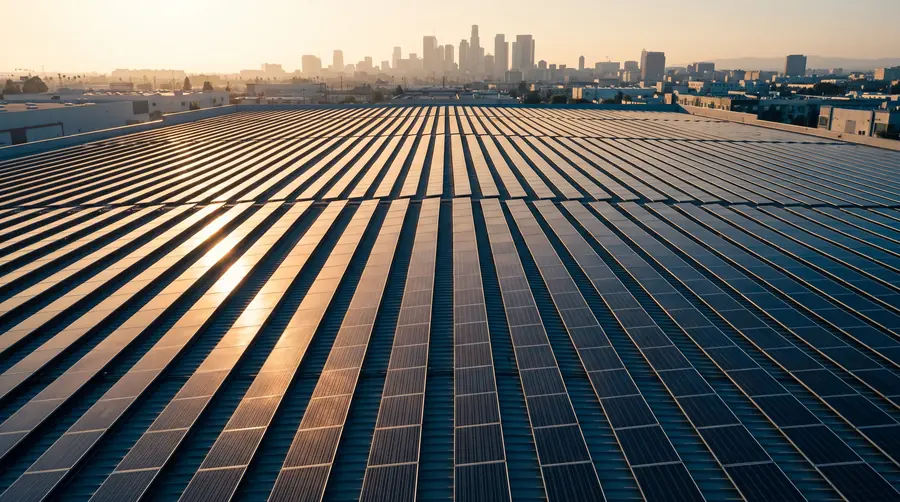
Questions
Build-to-Rent solar, answered.
Does every home in a build-to-rent community need its own solar system?
Under the residential provisions, each dwelling generally carries its own requirement, which is usually satisfied with a rooftop system on each home. Community-scale alternatives exist only where the Energy Commission has approved a specific program for that area. We evaluate the options during the community's design phase.
Can the solar program be standardized across the community?
Yes, and it should be. Plan-type designs, a consistent equipment set, and a single monitoring platform reduce cost and give the operator a system they can manage as a portfolio.
Related
More residential & multifamily building types.
All residential & multifamily · All building types · Where we work
Discuss Your Project
Planning build-to-rent in California?
Send us the drawings at any stage. We will size the Title 24 requirement, review the roof and electrical approach, and map the path to a Certificate of Occupancy that does not wait on solar.