
Residential & Multifamily / California
Solar Planning for Master-Planned Communities
A master-planned community is dozens of solar projects spread across a decade, multiple builders, and at least one Energy Code cycle. Residential parcels, apartment sites, a town center, schools, and recreation facilities each carry their own requirements, and all of them draw on the same utility infrastructure.
Eventure's Role
Eventure helps master developers set a community-wide solar and storage program early: builder design standards, utility coordination at the backbone level, and a consistent approach to the commercial and multifamily parcels that come later.
We bring solar into the project at schematic design, size the Energy Code requirement, coordinate the roof, structure, electrical rooms, and battery location with your architect and engineers, and carry the system through permitting, utility interconnection, inspection, commissioning, and closeout.
Title 24 treatment
Master-planned communities contain every category of Energy Code solar requirement: residential PV on homes, multifamily PV and high-rise battery storage on apartment parcels, and nonresidential PV and battery storage on retail, office, school, and recreation buildings. The applicable code cycle depends on each parcel's permit application date.
Design Considerations
What is different about master-planned communities.
- Utility capacity and interconnection at scaleThousands of exporting rooftops and several large commercial systems affect the utility's distribution planning. Early coordination with the serving utility avoids interconnection constraints on later phases.
- Builder design standardsA community-wide solar standard gives each builder clear expectations for roof design, electrical rough-in, equipment locations, and aesthetics, and keeps the street scene consistent.
- Code cycle transitionsPhases permitted after January 1, 2026 fall under the 2025 Energy Code, while earlier phases may remain under the 2022 code. The program should anticipate the transition rather than react to it.
- Community facilities and commercial parcelsRecreation centers, schools, retail, and multifamily parcels have nonresidential and multifamily requirements, including battery storage in many cases. We plan them alongside the residential program.
Keep Solar Off the Critical Path
Don't let solar be the last thing standing between your project and its Certificate of Occupancy.
On master-planned communities projects, as on every California building, the Energy Code requirement, the fire authority's review of the battery, the utility's interconnection timeline, and the building's final inspection all depend on the solar scope being designed, permitted, installed, and documented in sequence. We treat it as a scheduled trade from day one.
Solar and the Certificate of Occupancy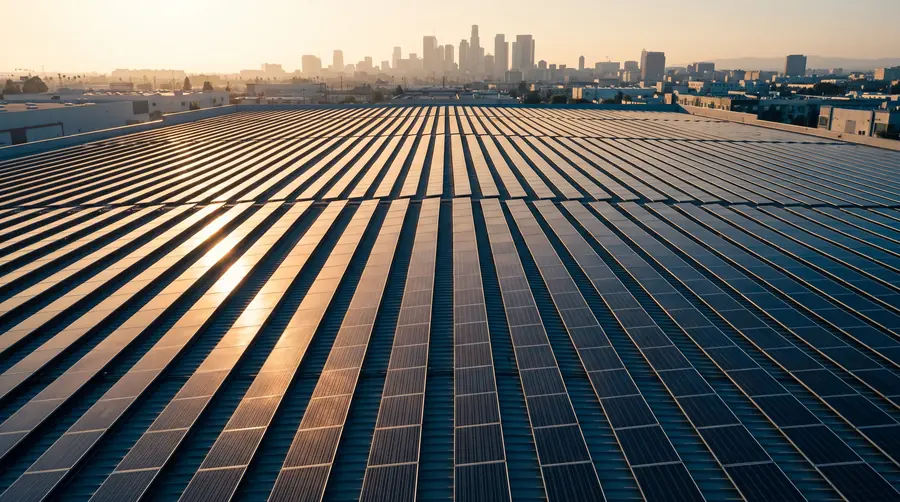
Questions
Master-Planned Communities solar, answered.
How early should solar planning start for a master-planned community?
During entitlement and backbone infrastructure design. Utility coordination, design standards for builders, and the treatment of commercial parcels are all easier to set before the first builder closes on a lot.
Can a community-scale solar system replace rooftop systems on homes?
Only where the Energy Commission has approved a community solar or similar program for that utility territory and building type. Those approvals are limited, so rooftop systems remain the default for most homes. We evaluate the available options for each community.
Related
More residential & multifamily building types.
All residential & multifamily · All building types · Where we work
Discuss Your Project
Planning master-planned communities in California?
Send us the drawings at any stage. We will size the Title 24 requirement, review the roof and electrical approach, and map the path to a Certificate of Occupancy that does not wait on solar.