
Residential & Multifamily / California
Solar for New Affordable Housing Developments
Affordable housing developers juggle tax credit deadlines, public funding conditions, prevailing wage obligations, and the same Energy Code requirements as every other multifamily project. Solar touches all of them. Done early, it is a scoring and operating-cost advantage. Done late, it is a schedule risk on a project that cannot afford one.
Eventure's Role
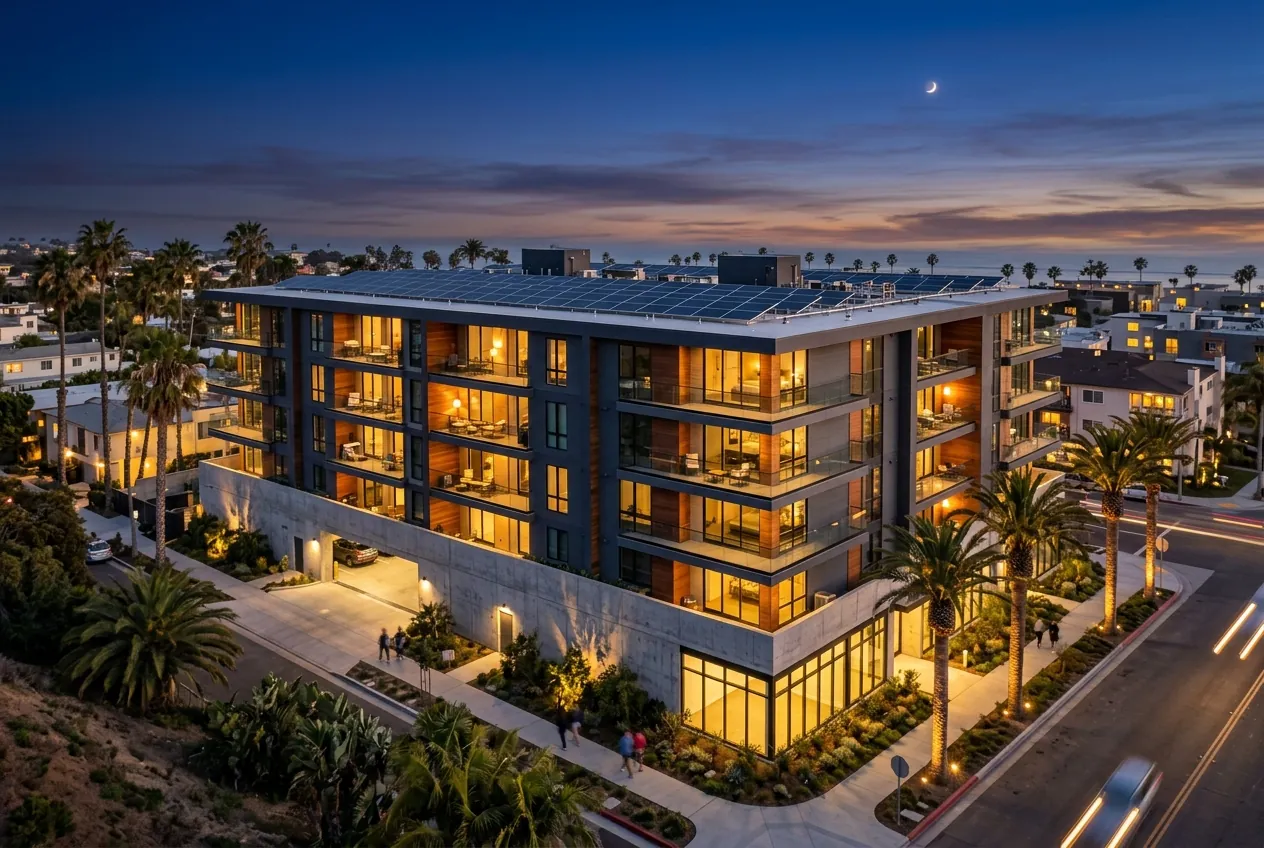
Eventure supports affordable housing developers, nonprofit owners, and their general contractors with solar and storage designed into the project from the funding application through Certificate of Occupancy.
We bring solar into the project at schematic design, size the Energy Code requirement, coordinate the roof, structure, electrical rooms, and battery location with your architect and engineers, and carry the system through permitting, utility interconnection, inspection, commissioning, and closeout.
Title 24 treatment
Affordable multifamily buildings follow the same multifamily PV requirements as market-rate projects: Section 170.2(f) for low-rise and 170.2(g) and (h) for high-rise, including the high-rise battery requirement. Funding program requirements may exceed the code minimum.
Design Considerations
What is different about affordable housing.
- Funding alignmentPublic funding sources and tax credit programs often reward energy performance, resilience, and tenant utility savings. We size and structure the system so it supports the application rather than complicating it, and we flag program eligibility rules that treat new construction differently from existing buildings.
- Tenant benefit structuresCommon-area offset lowers the owner's operating budget. Tenant allocations through virtual net energy metering lower resident bills. Each requires different wiring, metering, and documentation, and the choice should be made before electrical design is finalized.
- Prevailing wage and labor complianceMost affordable projects are already public works. Solar installed on investor-owned-utility net metering tariffs on multifamily buildings of three or more stories is also treated as public works under AB 2143. We build compliant labor pricing in from the first budget.
- Resilience for vulnerable residentsBattery storage can keep community rooms, elevators, and refrigeration running during outages. Where the building is four or more stories, a battery is already required; sizing it for resilience as well as compliance is a design choice we help owners weigh.
Keep Solar Off the Critical Path
Don't let solar be the last thing standing between your project and its Certificate of Occupancy.
On affordable housing projects, as on every California building, the Energy Code requirement, the fire authority's review of the battery, the utility's interconnection timeline, and the building's final inspection all depend on the solar scope being designed, permitted, installed, and documented in sequence. We treat it as a scheduled trade from day one.
Solar and the Certificate of Occupancy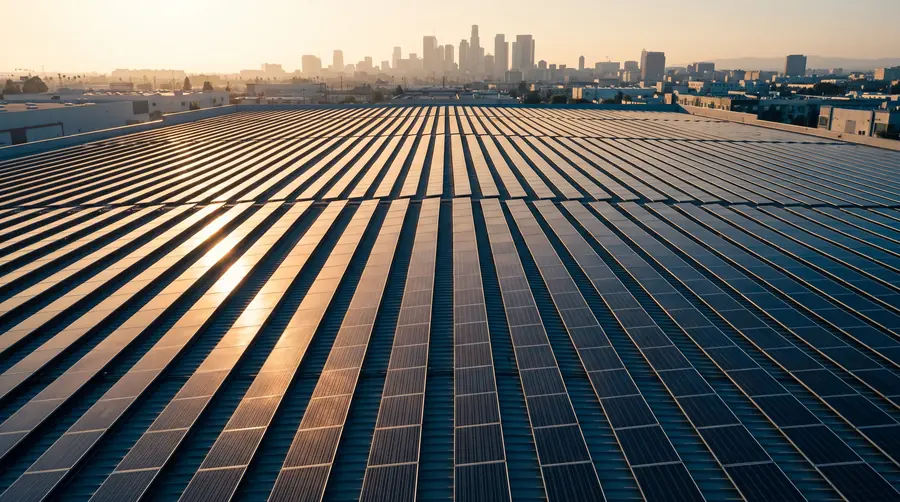
Questions
Affordable Housing solar, answered.
Are there incentives for solar on new affordable housing?
Incentive programs change frequently and many that target affordable multifamily are limited to existing buildings or have specific eligibility windows. We verify current program eligibility for each project rather than assuming a program applies to new construction.
Does prevailing wage apply to the solar scope?
If the project is already a public work, yes. Separately, under AB 2143 solar projects served under investor-owned-utility net energy metering or net billing tariffs are treated as public works, with exemptions for single-family homes, residential systems of 15 kW or less, and multiunit housing of two stories or fewer. We price labor accordingly from the start.
Related
More residential & multifamily building types.
All residential & multifamily · All building types · Where we work
Discuss Your Project
Planning affordable housing in California?
Send us the drawings at any stage. We will size the Title 24 requirement, review the roof and electrical approach, and map the path to a Certificate of Occupancy that does not wait on solar.