
Specialty & Institutional / California
Solar for New Religious Facilities
The 2025 Energy Code added religious worship to the occupancies that must install PV and battery storage, so new sanctuaries, temples, and worship centers permitted on or after January 1, 2026 carry the requirement. Many congregations were already pursuing solar for stewardship and operating cost reasons; the code now sets the floor.
Eventure's Role
Eventure works with congregations, their building committees, architects, and builders to plan solar that fits the campus, the budget, and the worship schedule.
We bring solar into the project at schematic design, size the Energy Code requirement, coordinate the roof, structure, electrical rooms, and battery location with your architect and engineers, and carry the system through permitting, utility interconnection, inspection, commissioning, and closeout.
Title 24 treatment
Religious worship occupancies were added to Tables 140.10-A and 140.10-B under the 2025 Energy Code, requiring PV and battery storage on newly constructed buildings with permit applications on or after January 1, 2026. Schools, offices, and assembly buildings on the same campus are evaluated by their own occupancies.
Design Considerations
What is different about religious facilities.
- New occupancy under the 2025 codeReligious worship buildings permitted on or after January 1, 2026 fall under Section 140.10. Projects permitted earlier may not have carried the requirement.
- Weekend-heavy loadsWorship loads concentrate on a few days a week. Storage and interconnection strategy determine how weekday production is valued.
- Campus buildingsFellowship halls, schools, and offices on a religious campus are evaluated separately and often carry their own requirements.
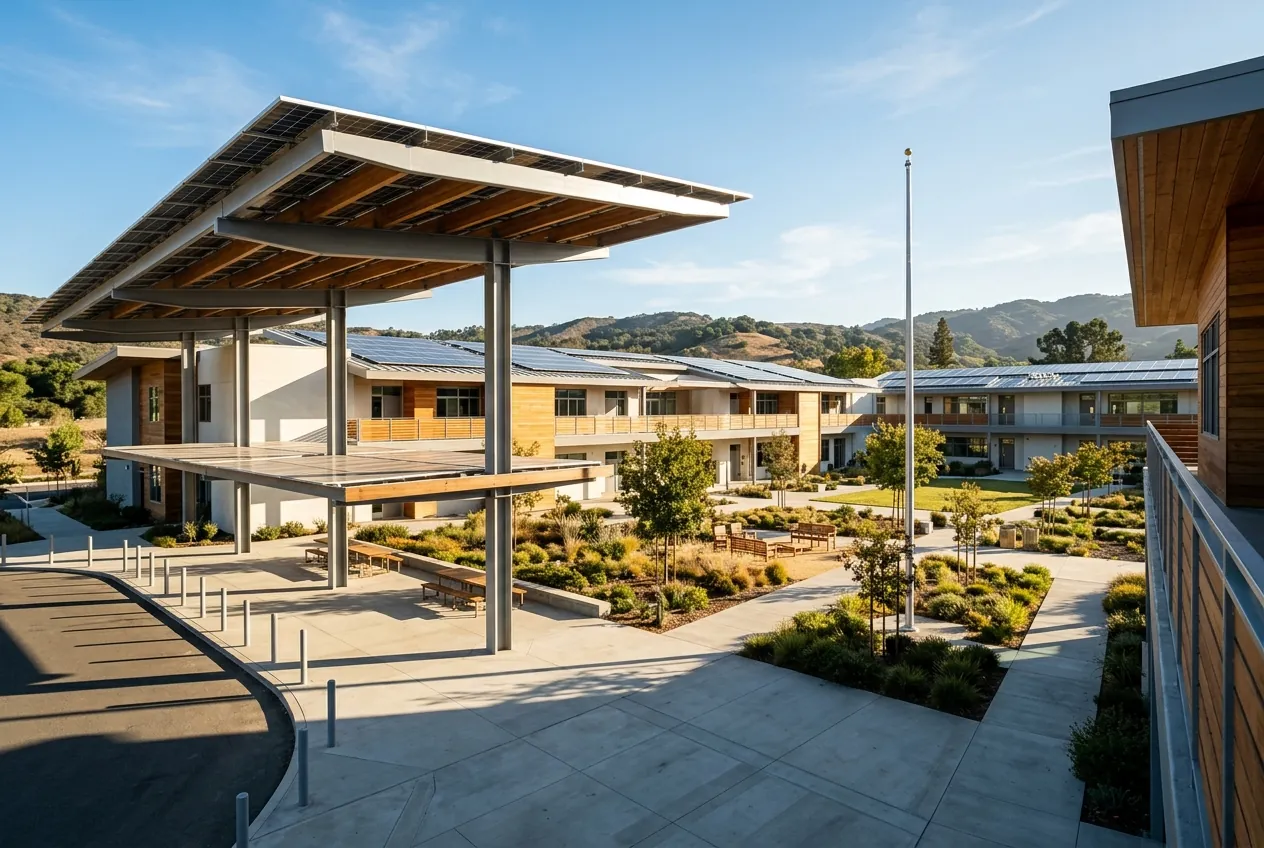
- Carports and shadeLarge parking lots suit carports that shade congregants and host capacity the sanctuary roof may not.
Keep Solar Off the Critical Path
Don't let solar be the last thing standing between your project and its Certificate of Occupancy.
On religious facilities projects, as on every California building, the Energy Code requirement, the fire authority's review of the battery, the utility's interconnection timeline, and the building's final inspection all depend on the solar scope being designed, permitted, installed, and documented in sequence. We treat it as a scheduled trade from day one.
Solar and the Certificate of Occupancy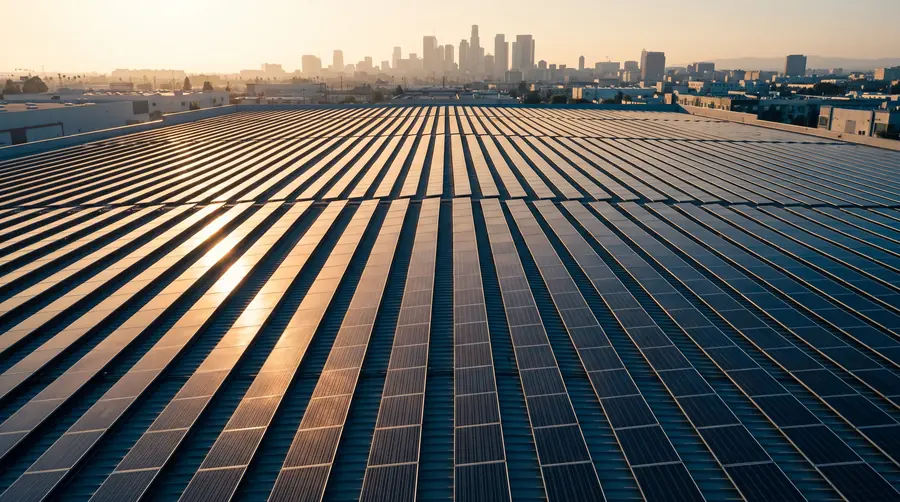
Questions
Religious Facilities solar, answered.
Does a new church in California need solar?
Under the 2025 Energy Code, yes. Religious worship was added to the listed occupancies, so new worship buildings with permit applications on or after January 1, 2026 must install PV and battery storage, subject to the roof-area and minimum-size exceptions.
How is weekday production used when the building is busiest on weekends?
Through the utility's net billing or program terms and, where included, storage. We evaluate the tariff and design the system so weekday production is valued as well as possible.
Related
More specialty & institutional building types.
All specialty & institutional · All building types · Where we work
Discuss Your Project
Planning religious facilities in California?
Send us the drawings at any stage. We will size the Title 24 requirement, review the roof and electrical approach, and map the path to a Certificate of Occupancy that does not wait on solar.