
Specialty & Institutional / California
Solar for New Agricultural Facilities
Agricultural operations pair high seasonal loads, irrigation pumping, refrigeration, and processing, with land that can host ground-mounted arrays. Many agricultural structures sit outside the Energy Code's PV requirements, so the decision is usually economic: what the operation pays for power and how the utility values what the array produces.
Eventure's Role
Eventure works with agricultural developers, growers, and processors throughout California to plan solar and storage for new facilities, from packing houses to pump stations.
We bring solar into the project at schematic design, size the Energy Code requirement, coordinate the roof, structure, electrical rooms, and battery location with your architect and engineers, and carry the system through permitting, utility interconnection, inspection, commissioning, and closeout.
Title 24 treatment
Many agricultural structures fall outside the Energy Code's PV requirements, while conditioned processing, cold storage, and office buildings on the same site may be listed occupancies under Section 140.10. The lines are drawn by occupancy and conditioning, which we confirm for each building.
Design Considerations
What is different about agricultural.
- Ground mounts and land useGround-mounted arrays on marginal land or adjacent to facilities often provide the best capacity. Land use approvals and agricultural preservation rules are checked early.
- Seasonal and pumping loadsHarvest, cooling, and irrigation loads concentrate in specific months. Sizing and storage strategy reflect the operation's actual calendar.
- Agricultural tariffsUtilities offer agricultural rate schedules with their own demand and time-of-use structures, which affect how solar and storage pay back.
- Energy Code applicabilityProcessing, cold storage, and office buildings may carry Energy Code requirements; many agricultural structures do not. We sort the buildings by classification at the start.
Keep Solar Off the Critical Path
Don't let solar be the last thing standing between your project and its Certificate of Occupancy.
On agricultural projects, as on every California building, the Energy Code requirement, the fire authority's review of the battery, the utility's interconnection timeline, and the building's final inspection all depend on the solar scope being designed, permitted, installed, and documented in sequence. We treat it as a scheduled trade from day one.
Solar and the Certificate of Occupancy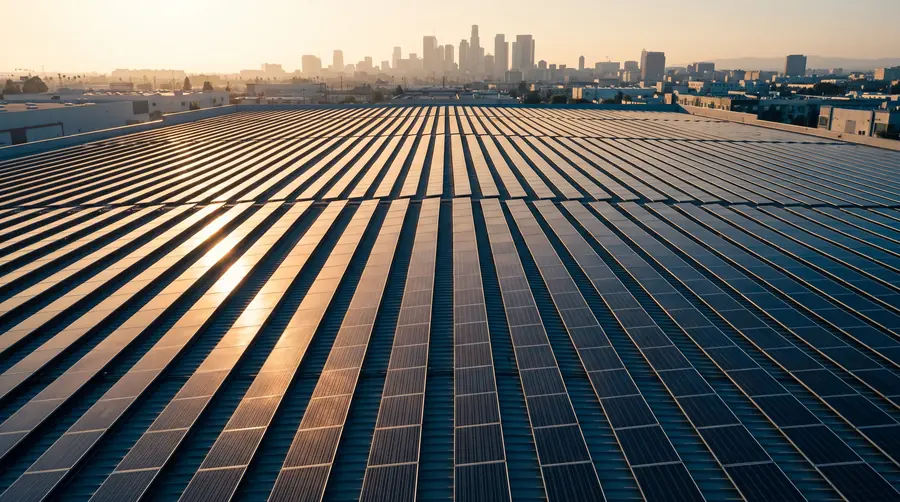
Questions
Agricultural solar, answered.
Are agricultural buildings required to have solar in California?
Many are not, because the Energy Code's PV requirements apply to specific occupancy types. Conditioned processing, cold storage, and office buildings on an agricultural site may carry the requirement. We confirm the classification for each structure.
Can solar run irrigation pumps?
Solar offsets pumping load on the utility bill and, with storage and controls, can support pumping schedules. Direct solar-to-pump systems exist for some applications; we evaluate which approach fits the operation.
Related
More specialty & institutional building types.
All specialty & institutional · All building types · Where we work
Discuss Your Project
Planning agricultural in California?
Send us the drawings at any stage. We will size the Title 24 requirement, review the roof and electrical approach, and map the path to a Certificate of Occupancy that does not wait on solar.