
Industrial & Logistics / California
Solar for New Logistics and Fulfillment Centers
Fulfillment centers are warehouses with the loads of a factory: conveyors, sortation, robotics, climate control for people and product, and increasingly, charging for electric delivery vans and trucks. Solar and storage planned with that load in mind offset a meaningful share of operating cost while meeting the Energy Code.
Eventure's Role
Eventure works with logistics developers, occupiers, and their design-build teams to size solar and storage against real automation loads and to plan the electrical infrastructure for fleet electrification.
We bring solar into the project at schematic design, size the Energy Code requirement, coordinate the roof, structure, electrical rooms, and battery location with your architect and engineers, and carry the system through permitting, utility interconnection, inspection, commissioning, and closeout.
Title 24 treatment
Conditioned logistics and fulfillment buildings are warehouses under Section 140.10 and must install PV and battery storage. Office and support areas are evaluated by their own occupancy and summed with the warehouse requirement.
Design Considerations
What is different about logistics & fulfillment.
- Automation and 24/7 operationsRound-the-clock loads mean most production is consumed on site. Storage extends the offset into night shifts and reduces demand charges from conveyor and sortation peaks.
- Fleet electrificationState fleet rules are pushing delivery and drayage fleets toward electric vehicles. Make-ready infrastructure, switchgear capacity, and conduit for chargers are cheapest in the base building.
- Service capacity and interconnectionLarge services with heavy loads and large arrays require careful interconnection studies. Starting the utility process during design avoids energization delays.
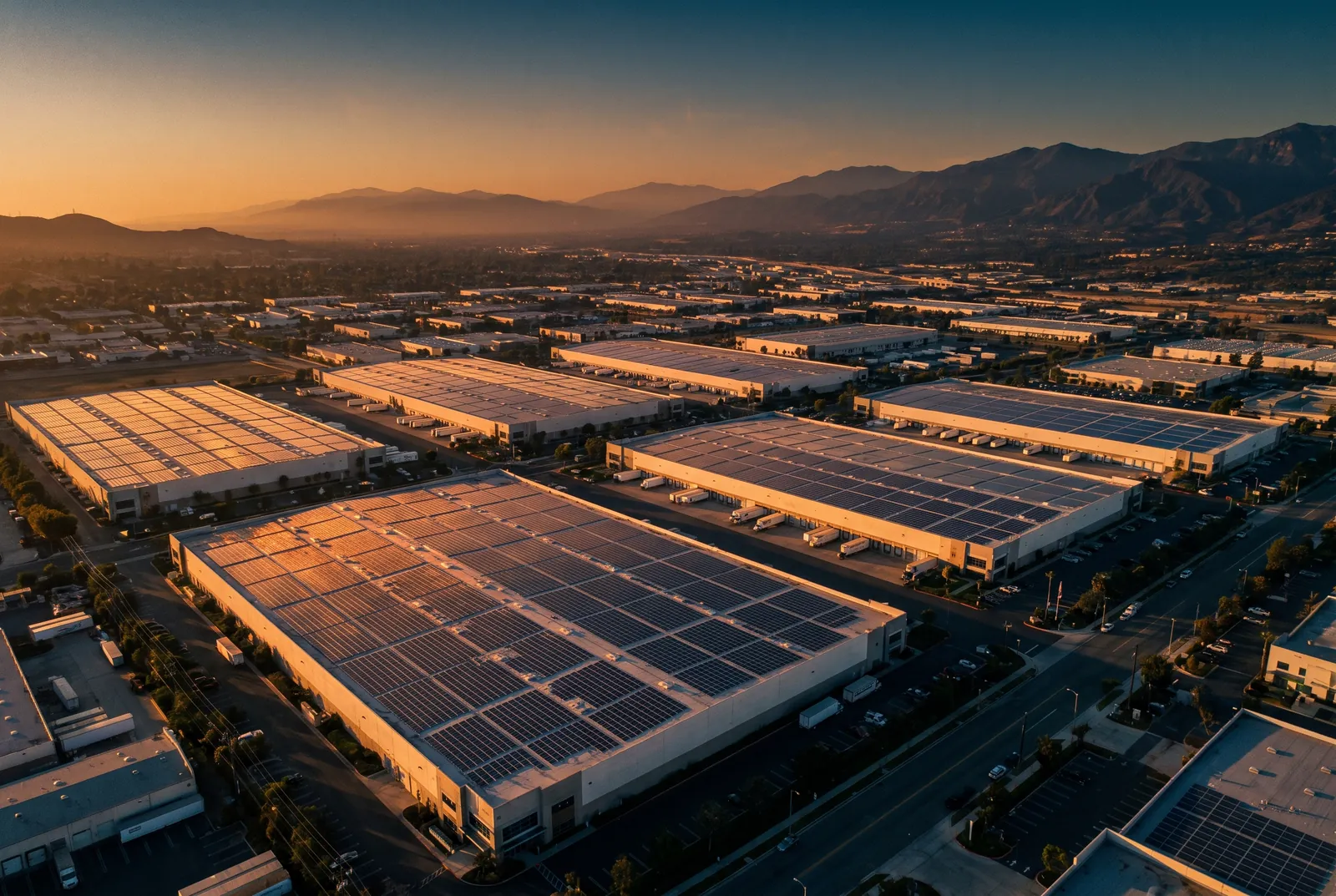
- Roof and truck court planningRooftop arrays and canopies over trailer parking and employee lots can both contribute capacity. Canopies need foundations and drainage coordinated with the civil design.
Keep Solar Off the Critical Path
Don't let solar be the last thing standing between your project and its Certificate of Occupancy.
On logistics & fulfillment projects, as on every California building, the Energy Code requirement, the fire authority's review of the battery, the utility's interconnection timeline, and the building's final inspection all depend on the solar scope being designed, permitted, installed, and documented in sequence. We treat it as a scheduled trade from day one.
Solar and the Certificate of Occupancy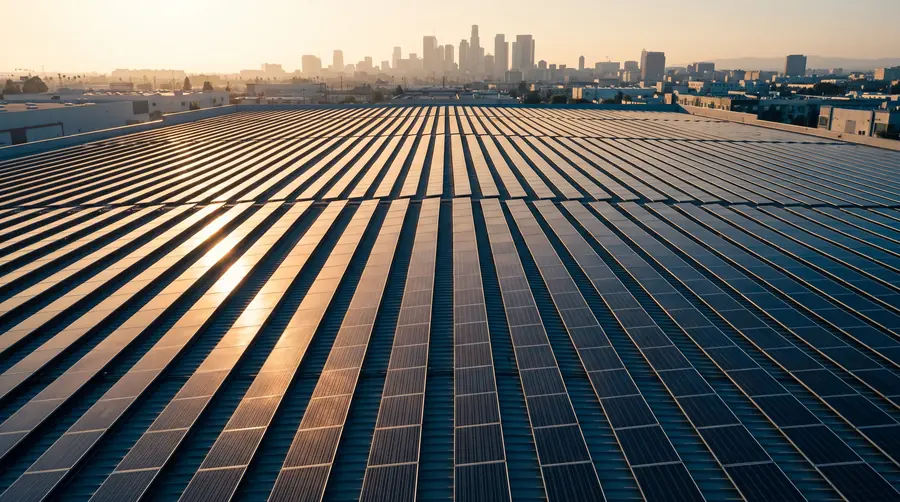
Questions
Logistics & Fulfillment solar, answered.
Can solar offset the power used by automation equipment?
Partially, and more with storage. A large roof array produces during the day, while automated facilities run around the clock. Storage shifts production into off-sun hours, and the overall offset depends on the facility's load and roof capacity, which we model during design.
Should a new fulfillment center plan for electric trucks?
Yes. Charging infrastructure for vans and trucks requires service capacity, switchgear space, and conduit that are far cheaper to install during construction. We coordinate fleet charging planning with the solar and storage design.
Related
More industrial & logistics building types.
All industrial & logistics · All building types · Where we work
Discuss Your Project
Planning logistics & fulfillment in California?
Send us the drawings at any stage. We will size the Title 24 requirement, review the roof and electrical approach, and map the path to a Certificate of Occupancy that does not wait on solar.