Industrial & Logistics / California
Solar for New Manufacturing and Industrial Facilities
Manufacturing plants combine high process loads, heavy rooftop equipment, and electrical infrastructure sized for machinery rather than lighting. Solar reduces operating cost where loads are daytime-heavy, storage attacks demand charges where they are not, and the Energy Code may or may not require either depending on how the building is classified and conditioned.
Eventure's Role
Eventure works with industrial developers, manufacturers, and general contractors to design solar and storage around the process, the roof, and the plant's electrical service.
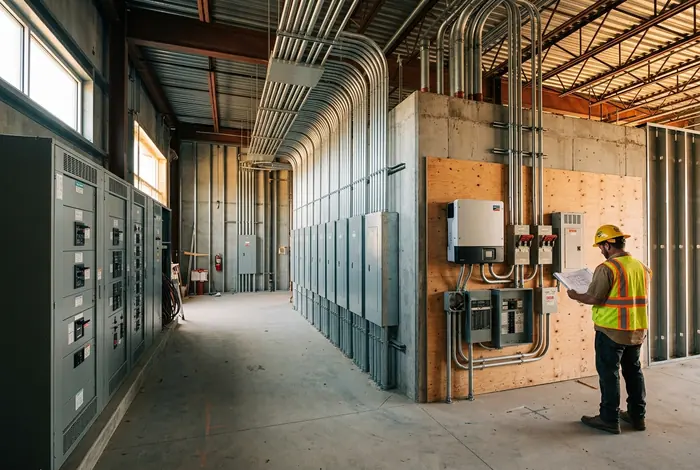
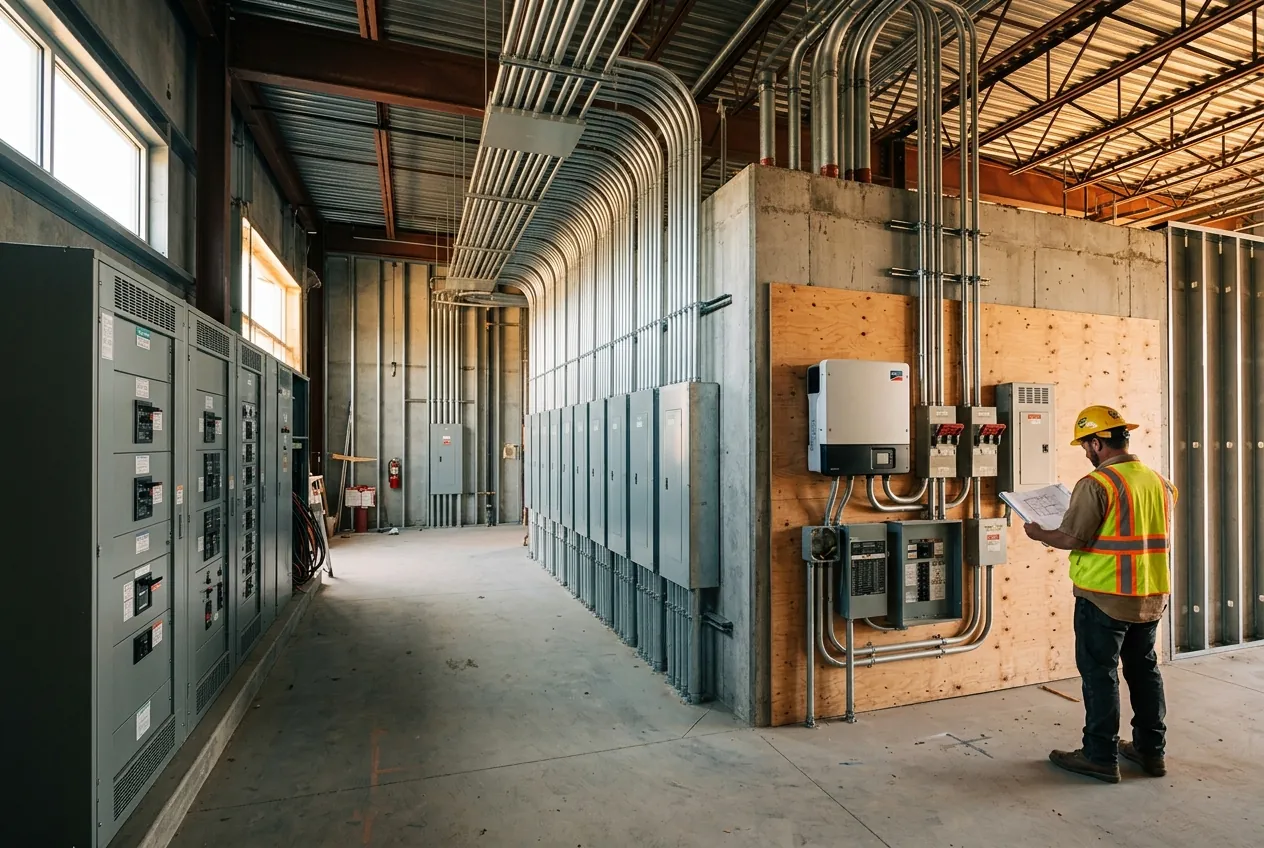
We bring solar into the project at schematic design, size the Energy Code requirement, coordinate the roof, structure, electrical rooms, and battery location with your architect and engineers, and carry the system through permitting, utility interconnection, inspection, commissioning, and closeout.
Title 24 treatment
Industrial buildings are evaluated by occupancy. Conditioned warehouse and office portions are listed occupancies under Section 140.10; manufacturing areas may be treated as covered processes. We determine the applicable requirements with the project's energy consultant during design.
Design Considerations
What is different about manufacturing.
- Classification and conditioningManufacturing spaces may be classified as warehouse, as another listed occupancy, or as a covered process depending on their use and conditioning. The classification determines whether Section 140.10 applies, so it is confirmed first.
- Process loads and demandMotor-driven equipment and compressors create demand peaks. Storage sized to the load profile can reduce demand charges that often exceed energy charges on industrial bills.
- Roof equipment and exhaustProcess exhaust, dust collection, and HVAC claim roof area and impose clearance and contamination considerations for modules. Early coordination protects both.
- Power quality and interconnectionLarge inverter systems alongside motor loads require coordination on power quality and protection settings with the electrical engineer and the utility.
Keep Solar Off the Critical Path
Don't let solar be the last thing standing between your project and its Certificate of Occupancy.
On manufacturing projects, as on every California building, the Energy Code requirement, the fire authority's review of the battery, the utility's interconnection timeline, and the building's final inspection all depend on the solar scope being designed, permitted, installed, and documented in sequence. We treat it as a scheduled trade from day one.
Solar and the Certificate of Occupancy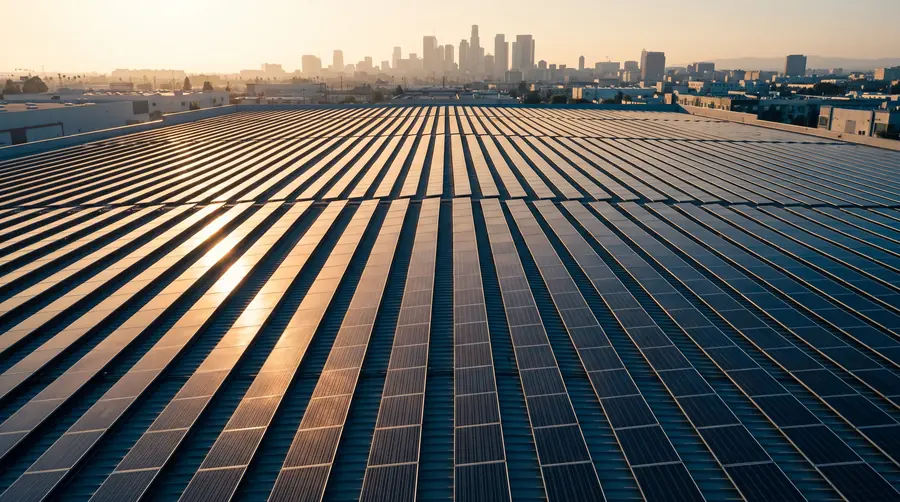
Questions
Manufacturing solar, answered.
Does Title 24 require solar on a manufacturing plant?
It depends on how the building's spaces are classified and conditioned. Office, warehouse, and other listed occupancies trigger the requirement when they make up at least 80% of floor area; manufacturing areas treated as covered processes may not. We confirm the analysis with the energy consultant early.
What matters most for industrial solar economics?
Demand charges, load timing, and roof capacity. Facilities with daytime production use solar directly; facilities with shift work or heavy peaks benefit from storage. We model both against the plant's load schedule.
Related
More industrial & logistics building types.
All industrial & logistics · All building types · Where we work
Discuss Your Project
Planning manufacturing in California?
Send us the drawings at any stage. We will size the Title 24 requirement, review the roof and electrical approach, and map the path to a Certificate of Occupancy that does not wait on solar.