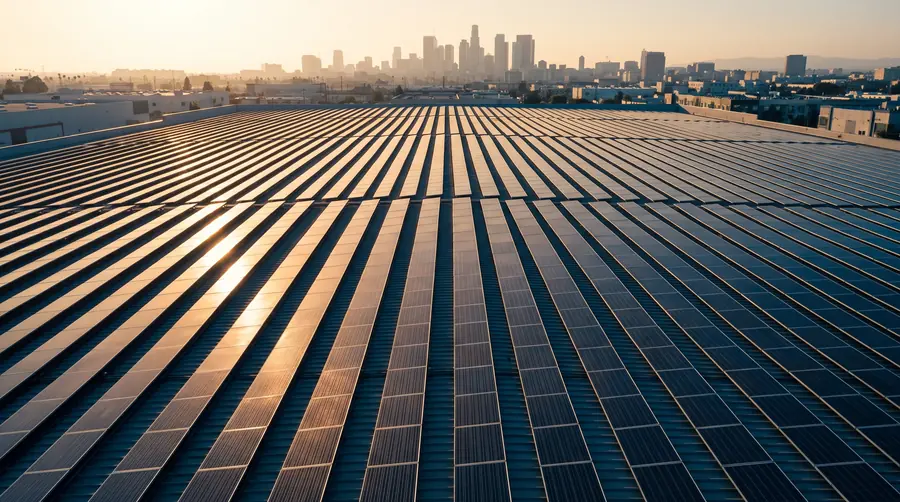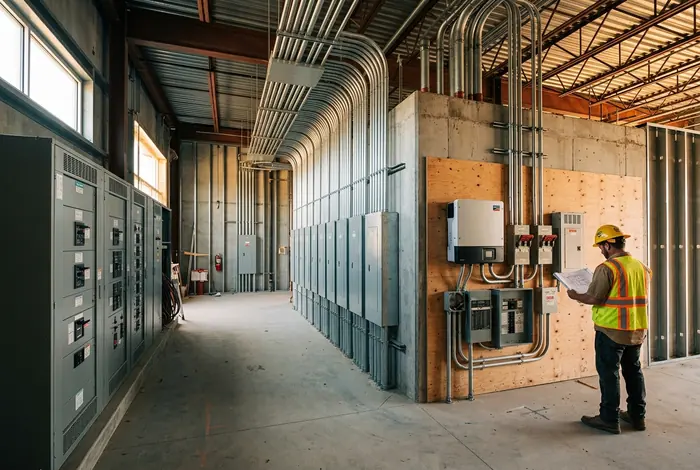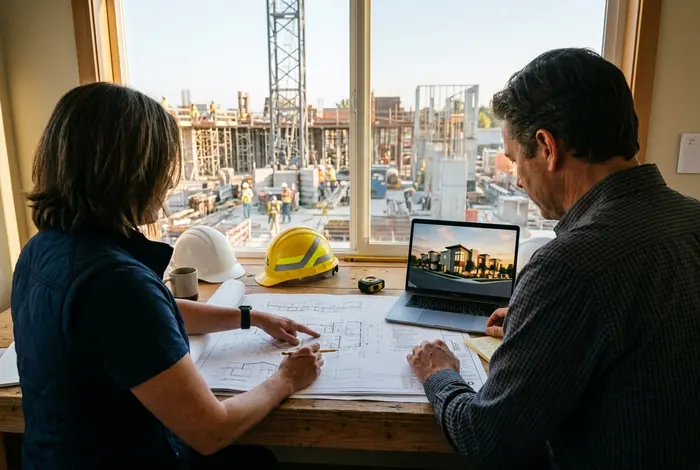
When Should Solar Be Designed Into a New Construction Project?
Schematic design. Every phase after that narrows the options and raises the cost of the same decisions.
Title 24
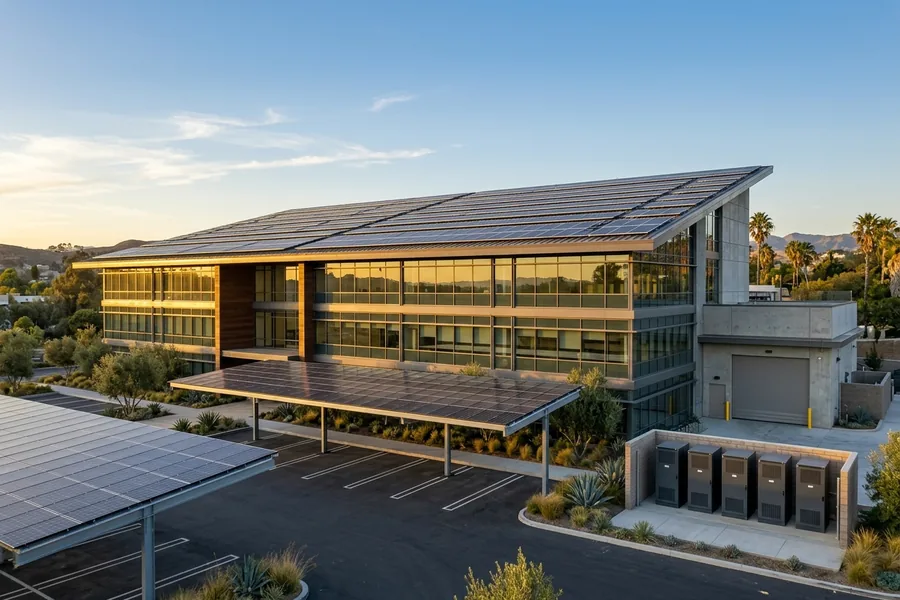
Since January 1, 2026, permit applications for new nonresidential buildings and multifamily buildings of three or more stories in California have been reviewed under the 2025 Energy Code. For the building types listed in Section 140.10, that means a solar PV system and, in most cases, a battery. Most project teams treat the number that comes out of the code calculation as the target. The code calls it a minimum, and on a new building the gap between the minimum and the right-sized system is usually the cheapest energy the owner will ever buy.
The prescriptive PV size is a formula: conditioned floor area multiplied by a capacity factor for the building type and climate zone, capped by the solar access roof area at 14 W per square foot for low-slope roofs. The factors are modest. A warehouse in most of Southern California is assigned 0.44 W per square foot of floor area, an office 3.13, a retail store about 2.9. The result is a system sized to offset a slice of the building's modeled load, not the load itself. Battery energy and power are then derived from that PV number. This is by design: the Energy Commission sets a floor it can defend as cost-effective for every building in the class, not the best system for your building.
This is the part that surprises owners. On a new construction project, the fixed costs of the solar scope are already in the budget. Structural engineering for the roof loads, electrical engineering and the single-line diagram, the Title 24 compliance documents, the permit, the utility interconnection application, the conduit runs, the inverter and switchgear pad, and the inspections cost roughly the same whether the array is 80 kW or 200 kW. Adding capacity means more modules, racking, and sometimes inverter capacity, priced per watt at the lowest marginal cost the project will ever see. Coming back after the Certificate of Occupancy to add the same capacity means a second engineering effort, a second permit, a second interconnection application, a roof already under warranty, and tenants in the building.
According to the California Public Utilities Commission, Southern California Edison rates rose about 43% between January 2021 and June 2026, roughly 8% per year against 4.2% inflation, and PG&E and SDG&E rose faster still. Every kilowatt-hour a building produces instead of buys is insulated from that trend. A larger array covers more of the daytime load, and a larger battery shifts production into the late-afternoon and evening peak where commercial time-of-use rates and demand charges concentrate. Demand charge reduction alone is often the larger line on a commercial bill. For leased buildings, lower operating expense flows straight into net operating income and the building's value.
Even when the budget only funds the minimum, the design can leave the door open. Specify the roof structure and membrane for full-coverage PV rather than the code area. Size conduit, the main switchgear, and the electrical room for the larger system. Pour the battery pad with room for additional cabinets. Set carport footings in the parking lot so canopies can follow. None of these changes move the construction budget in a meaningful way, and each one removes a reason the system cannot grow later.
The code tells you the smallest system you are allowed to build. The utility bill, the roof, and the lease tell you the right one. The difference between the two is decided during design, which is exactly when it costs the least to get right.
Code factors, exceptions, and utility figures cited here reflect our reading of published materials as of the date above; requirements depend on building type, climate zone, and permit timing, and we verify them for every engagement.
Keep Reading
Schematic design. Every phase after that narrows the options and raises the cost of the same decisions.
The building's final inspection depends on the Energy Code scope being complete and documented. If solar is the last trade on site, solar is the delay.
Twelve mistakes we see on California projects, why they happen, and what the fix looks like on paper.