When Should Solar Be Designed Into a New Construction Project?
Schematic design. Every phase after that narrows the options and raises the cost of the same decisions.
Guide
The utility runs on its own calendar. The application is the only lever, and it belongs in construction documents.
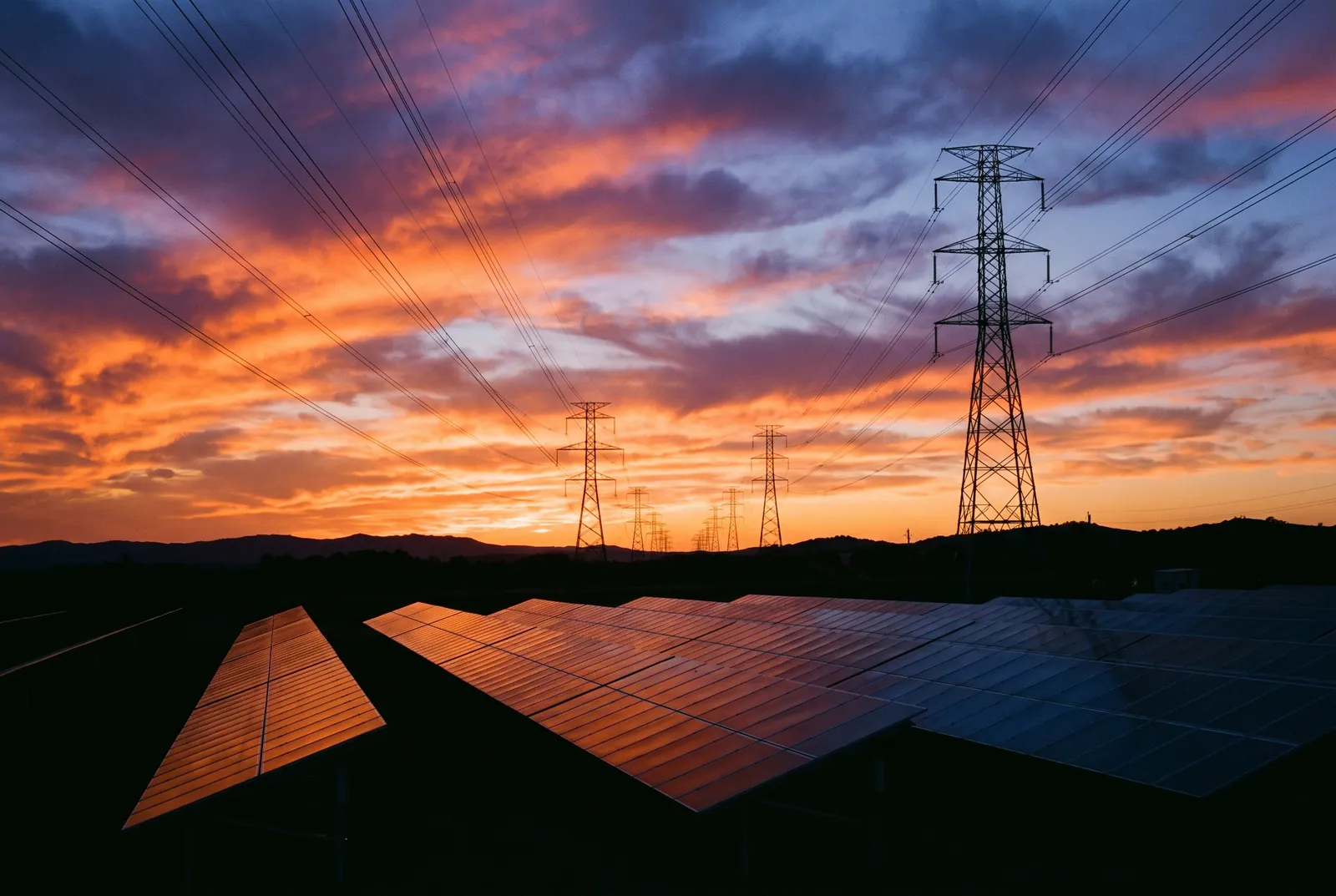
Every solar system on a new building connects to a utility service that is itself new. That creates an opportunity and a trap. The opportunity is that the solar interconnection can be designed into the service from the start. The trap is that the utility's review of both the new service and the solar system runs on the utility's schedule, and nothing on the construction schedule can speed it up.
Southern California Edison, Pacific Gas and Electric, and San Diego Gas & Electric interconnect customer generation under Electric Rule 21, with export compensation for new systems governed by the CPUC's net billing tariff. The process includes an application, technical review, potential supplemental studies where the system or service raises screens, an interconnection agreement, inspection or witness testing, and permission to operate. Larger systems and systems on larger services are more likely to require studies, and studies take time.
One consequence worth knowing: under AB 2143, nonresidential solar projects served under investor-owned-utility net energy metering or net billing tariffs are treated as public works for prevailing wage purposes, with exemptions for single-family homes, residential systems of 15 kW or less, and multiunit housing of two stories or fewer. The tariff choice has labor cost implications that belong in the budget early.
The Los Angeles Department of Water and Power, Anaheim Public Utilities, Riverside Public Utilities, the Sacramento Municipal Utility District, Silicon Valley Power, and other municipal utilities run their own interconnection processes, metering requirements, and solar programs. LADWP, in particular, operates its own net metering program and a Feed-in Tariff that purchases output from larger systems under long-term contracts. The rules of the serving utility shape the design, so the first question on any site is who serves it.
A system can be designed to export surplus production to the grid, to limit export, or to avoid it entirely. The choice affects compensation, the utility's technical screens, and the equipment required. On a new building, where the Energy Code sets a minimum size and the roof may allow much more, the export strategy and the tariff determine whether building beyond the minimum makes sense.
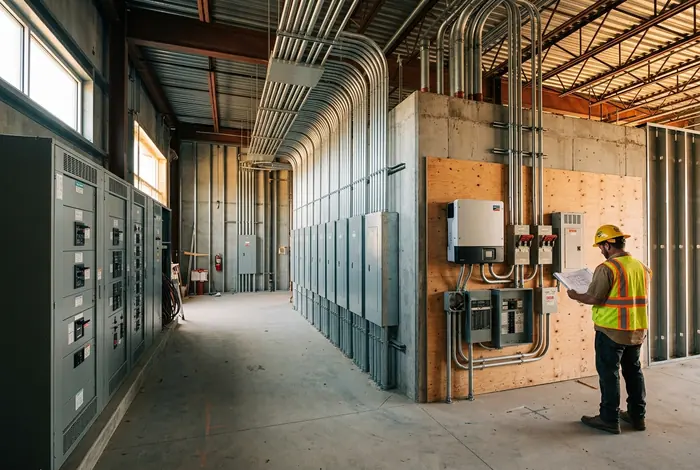
Identify the serving utility and its programs at concept. Coordinate the new service and the solar interconnection in the electrical design. File the interconnection application during construction documents. Reflect metering and disconnect requirements in the permit set. Track the utility's review alongside the construction schedule and sequence the witness test with the system's completion. We do all of this as part of our scope so permission to operate lands with the Certificate of Occupancy rather than after it.
During construction documents, once the electrical design and system size are fixed. Filing then lets utility review run parallel to construction. Filing after construction starts risks finishing after the building opens.
No. LADWP is a municipal utility with its own interconnection process, net metering program, and Feed-in Tariff. The CPUC's net billing tariff and Rule 21 apply to investor-owned utilities such as SCE, PG&E, and SDG&E.
Yes. If the system or the new service raises technical screens, the utility may require studies or infrastructure upgrades. Coordinating the service size and the solar interconnection together in design reduces that risk.
Keep Reading
Schematic design. Every phase after that narrows the options and raises the cost of the same decisions.
The building's final inspection depends on the Energy Code scope being complete and documented. If solar is the last trade on site, solar is the delay.
Twelve mistakes we see on California projects, why they happen, and what the fix looks like on paper.